
Share


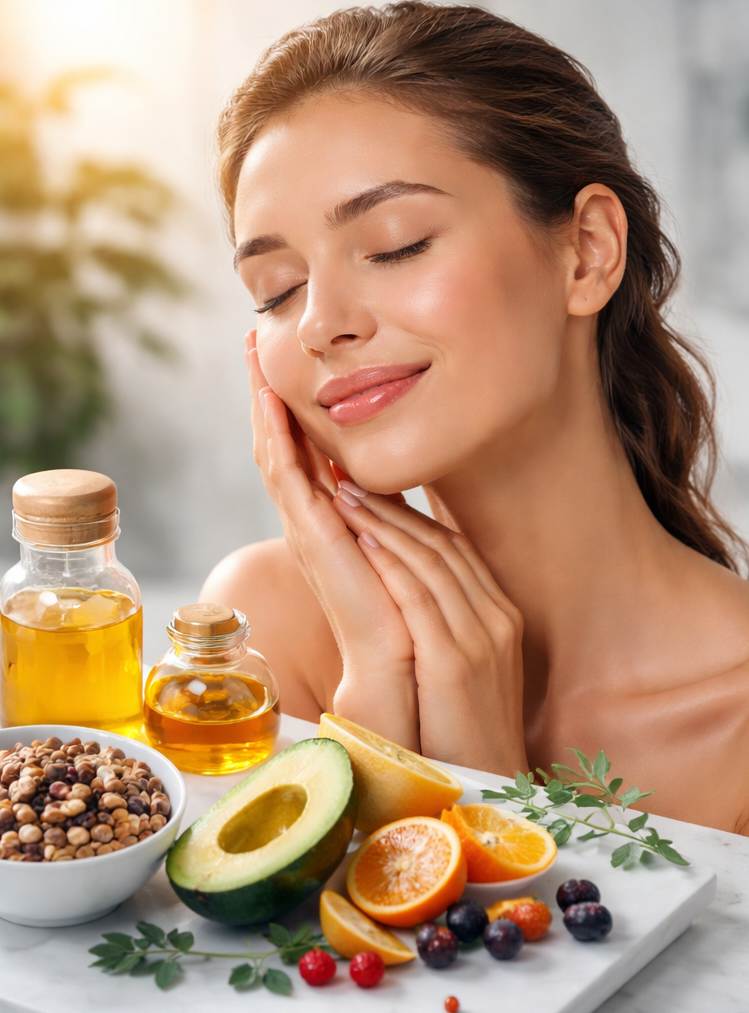
Hormones and Nutrition: The Silent Mistakes That Sabotage the Skin
(Without You Even Knowing It)
Persistent adult acne, dull skin despite high-quality treatments, unexplained redness, premature skin laxity… You see it in your clients, and sometimes even in yourself. Technologies are effective, protocols are well executed, yet results sometimes seem limited… what if nutrition was the missing link?
Today, one fact is clear: skin can no longer be separated from hormonal function — and hormonal balance is deeply influenced by nutrition. Understanding this connection is a decisive step toward smarter, more sustainable and more effective aesthetics.
Skin is a living tissue, sensitive to the body’s internal signals. In women, these signals are multiple and constantly evolving. The menstrual cycle, stress, age, and dietary habits continuously modulate hormonal balance.
Estrogen directly contributes to skin hydration, density and elasticity. When well balanced, skin is supple, luminous and resilient. When estrogen levels decline or fluctuate, skin becomes thinner, drier and gradually loses its radiance.
These variations are not limited to menopause. Chronic stress, repeated dieting or inadequate nutrition can be enough to disrupt this balance.
Research now shows that hormonal imbalances are not only linked to age or the menstrual cycle, but are also strongly influenced by nutrition and lifestyle, as highlighted by numerous studies shared by Inserm.
Insulin, stimulated by sugar intake, and cortisol, the stress hormone, play a major role in skin quality. When excessively stimulated, they maintain low-grade inflammation that manifests as dull complexion, persistent imperfections and accelerated skin aging.
When we think of sugar, pastries immediately come to mind. Yet the main sources of sugar in modern diets are often unsuspected: white bread, refined pasta, fruit juices, industrial cereals or so-called “healthy” snacks.
These foods cause repeated blood sugar spikes, leading to excess insulin production. Over time, this constant stimulation promotes inflammation and a process called glycation, which stiffens collagen fibers. The skin then loses suppleness, firmness and regenerative capacity.
Several international publications, particularly from the Harvard T.H. Chan School of Public Health, highlight the central role of pro-inflammatory diets in premature tissue aging, including skin — see here:
???? https://www.hsph.harvard.edu/nutritionsource
In women, dietary restriction is one of the most common causes of hormonal imbalance. When energy intake is insufficient, the body activates survival mechanisms. Non-essential functions, such as skin quality, are deprioritized.
The result is often visible: dull complexion, loss of density, more pronounced features, and reduced responsiveness to aesthetic treatments. Even the most advanced technologies may then deliver limited results — not due to lack of efficacy, but due to an unfavorable internal environment.
Hormones are synthesized from lipids. A diet lacking healthy fats directly weakens hormonal balance. Gradually, skin becomes drier, more sensitive and less resistant to external aggressions.
Poorly nourished cell membranes lose flexibility, impacting luminosity and overall skin quality. Deeply nourished skin is more stable, more radiant and more receptive to treatments.
Very common among active women, drinking coffee on an empty stomach causes a sharp increase in cortisol upon waking. Over time, this overstimulation maintains chronic hormonal stress, disrupts insulin regulation and promotes inflammation.
Skin then appears more tired, more marked, sometimes more reactive — without any obvious cause. A simple adjustment to morning habits can already visibly improve skin quality.
The gut plays a central role in eliminating used hormones. When it functions poorly, these hormones can be reabsorbed into the body, maintaining a constant hormonal imbalance.
This internal inflammation is directly reflected in the skin. Persistent imperfections, diffuse redness and increased sensitivity are all warning signs.
The role of the gut microbiota in hormonal and inflammatory regulation is now well documented by the work of the Institut Pasteur.
Modern aesthetic technologies stimulate cellular activity, tissue quality and collagen production. But their effectiveness also depends on the internal environment on which they act.
Skin supported by appropriate nutrition and a more stable hormonal balance responds better to treatments. Results are faster, more visible and, above all, more lasting. For professionals, this holistic approach leads to higher client satisfaction and stronger loyalty.
Skin is not corrected only on the surface — it is supported from within. Understanding hormonal mechanisms and the role of nutrition allows skin to be cared for more accurately, without guilt, and with a true long-term vision.
At Contour Paris, we believe technology reaches its full potential when integrated into a global approach that respects the female body. Modern aesthetics no longer simply treat visible symptoms — they understand how living systems function.
What if the most beautiful skin were ultimately the one we nourish as much as we treat?
Si tu veux, je peux aussi :
harmoniser ces deux articles pour une rubrique “nutrition & peau”,
ou les décliner en contenu expert pour centres partenaires / formations.
Share






























Vos informations ont bien été mises à jour.
Cette fenêtre se fermera automatiquement dans quelques secondes...
Cette fenêtre va se fermer automatiquement dans 3 secondes...
Veuillez saisir l'adresse email rattaché à votre compte client pour recevoir un lien de réinitialisation de votre mot de passe.
Vous pouvez maintenant commander et suivre vos commandes. Cette fenêtre va se fermer automatiquement dans 5 secondes...