
Share


It’s probably one of the most common discomforts in the industry. You’re highly skilled technically, you master your treatments, protocols, and technologies. But the moment it comes to recommending a treatment package, an additional service, or a more comprehensive approach, something suddenly feels uncomfortable.
Fear of sounding pushy. Fear of bothering the client. Fear of “sounding salesy.” As a result, you wait for the client to ask questions, you give vague information, and you end the appointment with a “if you’re interested, feel free to let me know” that leads nowhere.
This is exactly where sales are lost, not because of a lack of quality, but because of a lack of guidance.
The good news is: this isn’t about “selling better.” It’s about guiding better. And that’s something you already know how to do.
This is the most common and the most expensive mistake. Mentioning the price too quickly, even out of transparency, puts the cost at the center of the conversation before the client fully understands the value of the treatment. And when price comes too early, the brain immediately shifts into comparison mode: “that’s expensive,” “I’ll think about it,” “I’ll look elsewhere.”
Research on consumer behavior shows that people rely on deeply rooted cognitive biases to navigate an environment overloaded with information. In a treatment room, this translates into one simple rule: before discussing price, create understanding.
A client needs to understand why she has this issue, why previous solutions haven’t worked, and what will genuinely change with your protocol. In other words: before selling a treatment, sell the understanding.
The word “offer” may seem harmless. It isn’t.
When you say, “I can offer you a treatment package,” you place yourself in a waiting position, as though you need permission. On the other hand, when you say, “Based on your skin and what you’ve explained to me, what I truly recommend is…” you step into the role of an expert.
And clients don’t come to a clinic looking for someone to simply present options. They come looking for someone who knows.
Most clients are exhausted by contradictory routines, online advice, and impulsive product purchases. What they really want is a professional who can clearly tell them what to do. The more confidently you make your recommendation, the more reassuring it becomes.
External source : How Service Companies Can Earn Customer Trust and Keep It
4. Phrases That Sabotage a Sale Without You Realizing It
“It’s a little expensive, but…” → you devalue your treatment before the client even objects.
“Of course, you don’t have to…” → you remove guidance instead of leading the client.
“I’ll let you think about it…” → you close the conversation at the exact moment it should open.
“It’s only if you want to…” → you signal that you don’t fully believe in it yourself.
“This protocol is particularly suited to your concern.”
“This is what will deliver the best results in your case.”
“To achieve a real transformation, consistency will be important and that’s what we’re going to build together.”
The vocabulary doesn’t only change the client’s perception. It changes your own posture within the relationship.
Many professionals wait until the end of the appointment to discuss the next step. That’s too late. The sale begins during the consultation and is built throughout the treatment.
The goal is simple: the more the client understands what is happening with her skin, the less she will feel like she’s being sold to.
A few natural phrases to integrate during the session:
“You see this area? It’s often linked to chronic inflammation that gradually develops over time.”
“This is exactly the type of skin that responds extremely well to a treatment plan one session alone cannot achieve what a consistent protocol can.”
“What your skin mainly lacks is regular stimulation. That’s why previous results didn’t last.”
When a client feels understood, she trusts you. And trust always comes before the purchase decision.
During the consultation:
“I can see that your skin is struggling to breathe, the pores are congested in several areas, and your complexion lacks radiance. That’s extremely common, and it’s exactly what we’re going to treat today with Peel & Glow. What I love about this protocol is that it combines six technologies in one single session: deep cleansing, hydration, and active ingredient infusion. You’ll see the difference immediately after the treatment.”
“Your skin responded really well can you see the difference? For this result to truly settle in and not just be a temporary glow boost, I recommend a package of three sessions spaced two weeks apart. After that, one maintenance session per month is enough. What we build over three months lasts.”
“What’s making you hesitate? The timing, or something else?” [Let her answer.] “I understand. What I can suggest is starting with two sessions and then assessing together how your skin evolves. That way, you can judge the results for yourself before committing long-term.”
“What I’m noticing around your jawline is a slight loss of firmness. That’s completely normal at this stage, and it’s something we can genuinely work on. The multipolar radiofrequency technology stimulates collagen production deep within the skin. The results are visible from the very first session, but it’s a deeper process with long-lasting improvements after four to six sessions. The clients who commit to a full package are consistently the ones who come back.”
“Imagine your face two months from now: a more defined contour, firmer skin to the touch, and less visible fatigue. That’s exactly the goal we can achieve together with a well-structured protocol.”
During the session:
“The blue LED light I’m applying right now works directly on the bacteria responsible for inflammation. It’s completely non-aggressive: your skin isn’t being attacked, it’s receiving support. Combined with the cleansing we did beforehand, the effect becomes much stronger. That’s why I systematically recommend pairing both together.”
“With acne, what truly makes the difference isn’t one session it’s consistency. I recommend a package of six sessions over two months. Most of my clients notice a real reduction in inflammation by the third session. After that, we move to monthly maintenance sessions to stabilize the results.”
7. How to Respond to “I Need to Think About It”
This is the most common objection and it almost never means “no.” It usually means: “I need more information,” “I’m afraid of making the wrong decision,” or “I’m not fully convinced yet.”
The worst response:
“No problem, let me know.”
The right approach:
explore calmly, without pressure.
“Of course. What’s making you hesitate today?”
“I completely understand. What we can do is start with a trial session so you can evaluate the results before committing to a package. And if you prefer to spread things out, some clients choose to begin with one session per month. It takes slightly longer, but it works too.”
“That’s a very fair concern. What I can tell you is that for this type of skin and with this protocol, results are visible from the very first session you’ve just seen that yourself. As for long-term improvement, that’s exactly the purpose of a package: creating lasting change, not just a temporary effect.”
“I hear you. What often happens is that people do one or two isolated sessions without a structured protocol. What we’re doing here is different: it’s a progressive and consistent approach. If previous treatments didn’t work, it’s probably more about consistency and methodology than your skin itself.”
8. Silence: The Most Underrated Sales Tool
After announcing a protocol or a price, the natural instinct is to keep talking to fill the silence, reassure the client, avoid discomfort. That’s often a mistake.
The silence following a recommendation is a working space for the client. It’s the moment where she projects herself, processes the information, and starts making a decision. By filling that silence too quickly, you interrupt that process and unintentionally signal that you’re uncomfortable with your own recommendation.
The best practitioners don’t necessarily speak more. They speak better, and they know when to stay silent. Delivering a clear recommendation, stating the price confidently, and then waiting that is often the most effective sequence.
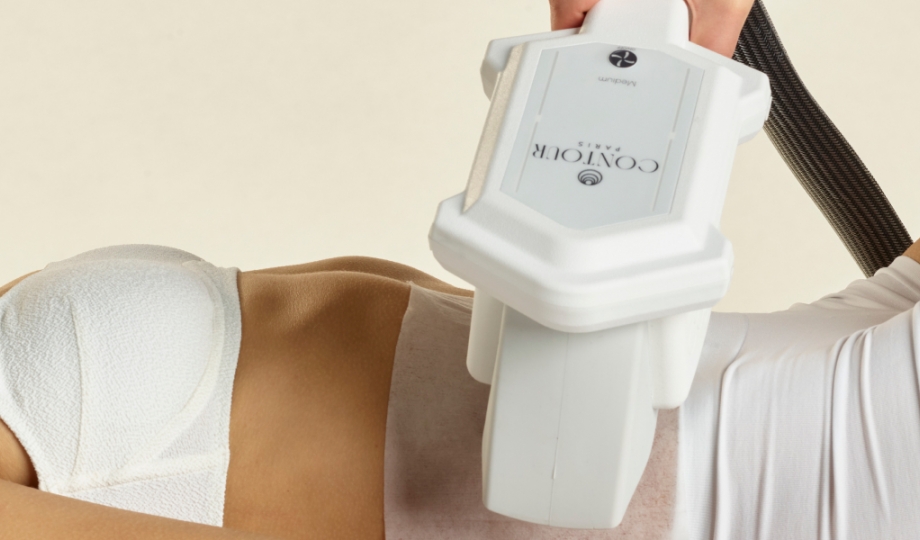
A client is not buying a cryolipolysis session. She’s not buying a skin-cleansing protocol. What she’s really buying is a projection of herself: more confident, more comfortable in her body, happier with what she sees in the mirror.
Once you understand that, your entire communication changes naturally. You stop describing a technology you describe a lived benefit. You stop selling a six-session package you sell the idea of looking at herself differently in two months.
That shift from technical explanation to emotional projection is what separates a purely technical practitioner from a true expert in client guidance. And your clients feel that, even if they can’t explain it themselves.
Conclusion: Selling Is Simply Guiding with Conviction
Sales in the treatment room should never feel like pressure neither for you nor for your client. When a protocol is relevant, genuinely answers a need, and is explained with confidence and clarity, the purchase decision becomes almost natural.
The problem is not selling. The problem is not daring to guide.
And in a market where clients are overwhelmed with offers and contradictory advice, your ability to clearly say “this is what you need, and this is how we’ll get there” has become just as valuable as your technical expertise.
The key is making a recommendation, not an offer.
“What I recommend for your skin is a package of three sessions” positions you as an expert.
“I can offer you a package if you’d like” puts you in a waiting position. One reassures; the other leaves the client alone with the decision.
Ideally, you plant small seeds throughout the session: short explanations about what you’re doing and why consistency matters. The formal recommendation naturally comes at the end of the treatment, when the client has just seen the result on her skin. That is the best moment she’s emotionally connected to the positive outcome.
Never lower your price: adjust the rhythm if necessary. Suggest a trial session or monthly sessions instead of bi-weekly appointments. And always come back to value: what the client is buying is not a session, but a result.
No but you can discuss money last. The ideal sequence is: understand the need, explain the protocol, describe the expected benefits, then confidently announce the price. When the value is clear, price becomes far less of an obstacle.
Acknowledge her experience without minimizing it, then differentiate your approach from what she previously experienced.
“I understand. What often happens in these situations is that clients do isolated sessions without a structured protocol. What we do here is different.”
Then suggest a trial session so she can judge the results for herself without commitment.
Share

































































Vos informations ont bien été mises à jour.
Cette fenêtre se fermera automatiquement dans quelques secondes...
Cette fenêtre va se fermer automatiquement dans 3 secondes...
Veuillez saisir l'adresse email rattaché à votre compte client pour recevoir un lien de réinitialisation de votre mot de passe.
Vous pouvez maintenant commander et suivre vos commandes. Cette fenêtre va se fermer automatiquement dans 5 secondes...