
How to Choose a Professional Aesthetic Device? The 15 Criteria That Truly Make the Difference
You have decided to invest in an aesthetic technology for your institute. Good news: it is probably one of the most strategic decisions of your career. Less good news: you are now facing a jungle. Dozens of manufacturers, almost identical promises, and prices that can vary from simple to tenfold for devices that, on paper, “do the same thing”. So, how do you separate the wheat from the chaff? How do you avoid buying a device that ends up sitting unused in the corner of a treatment room after six months? We have reviewed the 15 criteria that truly matter. Let’s sort it out together!
1. The Real Needs of Your Clientele: The Starting Point That Is Too Often Overlooked
It may seem obvious. And yet, this is the number one mistake. Many professionals buy a device because it is “trendy”, because a competitor has invested in it, or because a sales representative was particularly convincing. The result: a technology that does not match your local demand.
Before even comparing technical sheets, ask yourself the right questions. What is the profile of your clientele? Their average age? Their recurring requests in the treatment room? A young, urban clientele will be more likely to choose permanent hair removal; a more mature clientele will be more interested in anti-aging and firming treatments. The industry study published by OPCO EP on changes in client expectations confirms this growing demand for personalization: clients no longer want standardized treatments, they want a response to their specific concern.
Our advice: survey your existing clients before investing!
2. Regulatory Compliance: The Non-Negotiable Criterion
This is the foundation of everything. Since the implementation of European Regulation 2017/745, aesthetic devices such as laser or intense pulsed light hair removal equipment and lipolysis devices have been subject to the same safety requirements as medical devices under Annex XVI of the regulation. In practical terms: a serious device must be able to provide its compliance documentation, without hesitation or commercial evasion.
On the practical side, French regulation has also evolved: Decree No. 2024-470 of May 24, 2024 now strictly regulates non-therapeutic intense pulsed light and laser hair removal procedures, with an obligation for initial training and regular refresher courses for practitioners.
A manufacturer that does not talk to you about compliance or your regulatory obligations? Run. That silence says a lot about the rest.
3. French Manufacturing: Much More Than a Marketing Argument
Let’s be honest: “Made in France” is sometimes used as a simple commercial banner. But in the field of aesthetic technologies, it reflects very concrete realities.
First, traceability. A device designed and manufactured in France is subject to European standards throughout its production chain, under the supervision of competent authorities — in France, the ANSM oversees the market surveillance of the devices concerned. Each component is identifiable, each step documented. Conversely, some low-cost imported devices effectively escape any serious control: the DGCCRF regularly warns about non-compliant equipment present on the market.
Then, responsiveness. A breakdown on a device manufactured on the other side of the world can mean weeks of downtime while the spare part crosses two oceans. A French manufacturer has parts locally, technicians locally, and a contact person who speaks your language and understands your regulations.
Finally, legal responsibility. In the event of a problem, you are dealing with a company governed by French law, with clear legal obligations towards you. Try obtaining compensation from a seller located 9,000 kilometers away...
The possible additional cost at purchase? It is more than recovered over the lifetime of the device. We will come back to this in criterion No. 10.
4. The Quality of Materials: Your Device Must Inspire Confidence at First Sight
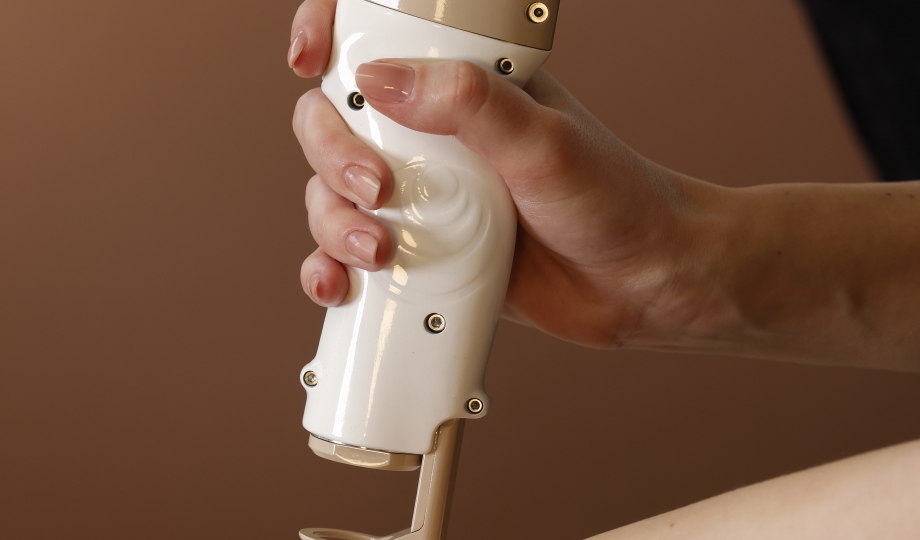
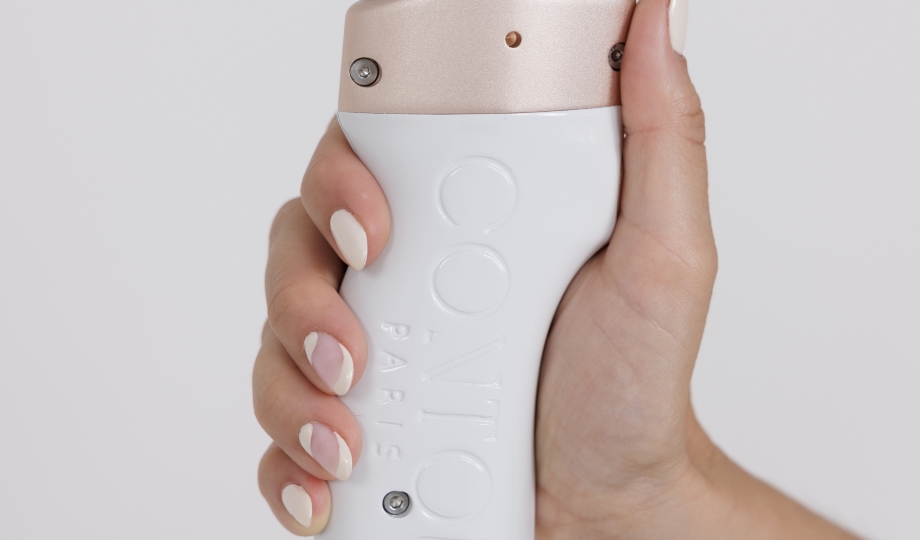
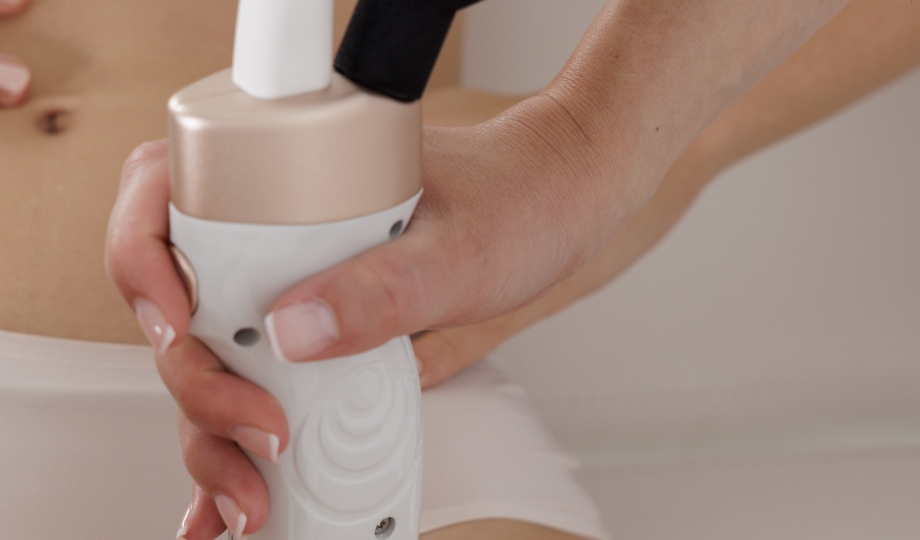
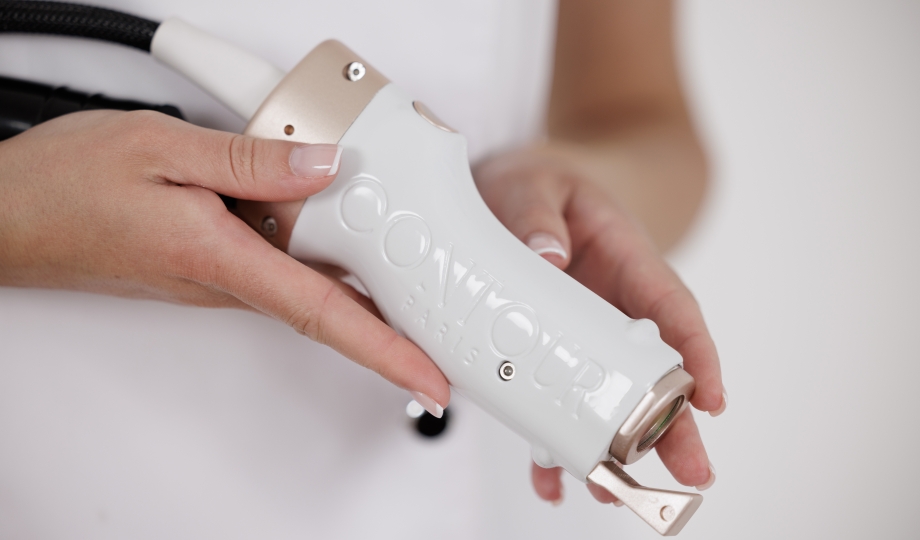
Try the following exercise during a demonstration: touch the device. Really touch it. Weigh the handpiece in your hand, observe the finishes, handle the connections.
A lightweight plastic chassis that “sounds hollow”, thin cables, fragile wheels, a shell that bends under finger pressure: these are all warning signs. A professional aesthetic device operates several hours a day, five to six days a week, for years. It undergoes constant handling, movement between treatment rooms, and repeated cleaning.
And there is another, more subtle issue: your clients’ perception. A client lying next to a device that looks fragile or low-end will consciously or unconsciously doubt the seriousness of the treatment. Conversely, robust equipment with refined finishes instantly strengthens the credibility of your service and justifies your pricing position. Your device is part of your brand image, just like your decor or uniforms.
5. Built-In Safety: What Protects Your Clients Protects Your Business
Two devices can display the same technology in a brochure and yet present radically different levels of safety. The questions to ask are precise: does the device have continuous temperature sensors? Automatic shutdown systems in case of anomaly? Locked protocols that prevent dangerous settings?
This is not a luxury. Reports of burns and adverse effects linked to faulty or improperly used aesthetic devices do exist, and the ANSM encourages both professionals and individuals to report any incident on the official reporting portal.
Remember: an incident in the treatment room is a serious experience for the client, but it also engages your professional responsibility and puts your local reputation at stake. Safety is not a premium option. It is the bare minimum.
6. Demonstrated Effectiveness: Demand Proof, Not Promises
“Visible results from the first session”, “revolutionary technology”, “proven effectiveness”... These phrases cost nothing to print. What matters is what lies behind them.
Always ask: which studies does the manufacturer rely on? Are the treatment protocols documented? Are real and verifiable before-and-after results available? Can you speak with professionals already equipped, without the manufacturer selecting its ambassadors for you?
A serious manufacturer will share its references without difficulty. Ideally, they will even offer you the opportunity to test the device or attend a demonstration on a model. Transparency, always and again, remains your best compass.
7. Included Training: A Device Is Only as Good as the Hands That Use It
This may be the most underestimated criterion of all. An exceptional device in untrained hands delivers mediocre results — and sometimes worse.
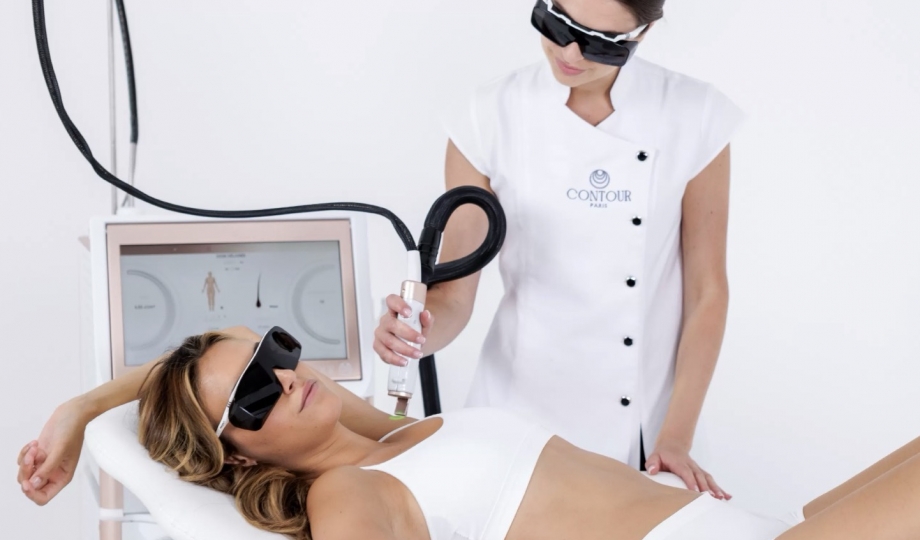
Three questions to ask before signing. Is training included in the purchase price? Some manufacturers charge extra for it, which significantly increases the final cost. What is its actual duration? A two-hour “training session” by video call has nothing to do with several in-person days including theory, practical work on models, and post-treatment follow-up. Is it delivered by a certified training organization? Qualiopi certification, awarded on the basis of the National Quality Framework, attests to the seriousness of the training process and determines access to public and mutualized funding.
Also remember the regulatory framework: for laser and intense pulsed light hair removal, training is no longer a commercial “extra”; it has been a legal obligation since the decree of May 2024. A manufacturer that sells you a hair removal device without mentioning training is literally putting you outside the law.
8. After-Sales Service: The Criterion You Always Discover Too Late
Nobody thinks about after-sales service on the day of purchase. Everyone thinks about it on the day of the first breakdown.
Do this simple calculation: if your device generates €300 in revenue per day and remains out of service for three weeks while waiting for a part, the breakdown costs you more than €6,000 — not counting disappointed clients, cancelled appointments, and interrupted treatment plans.
The right questions to ask: what is the guaranteed intervention time? Is technical support easy to reach, in French, through a team that truly knows the device? Are spare parts stocked in France? Is a loan device offered in case of prolonged downtime?
Here again, the manufacturer’s geographic proximity changes everything. Efficient after-sales service is the difference between a 48-hour inconvenience and a month-long financial hemorrhage.
9. Warranty and Maintenance: Read the Fine Print
The legal guarantee of conformity protects every buyer, but in a professional context, it is the manufacturer’s commercial warranty that makes the difference. Its duration first: a manufacturer that guarantees its device for a long time is a manufacturer that trusts its manufacturing quality. Its scope next: parts, labor, travel costs? Some warranties that seem attractive on paper actually exclude the essentials.
Also question the manufacturer about preventive maintenance. A high-quality aesthetic device must be regularly serviced — this is also a guarantee of safety for your clients and consistent performance for your treatments. Structured annual maintenance, including device checks and updates, should be part of the offer. If the subject is never raised spontaneously, be cautious.
10. Total Cost of Ownership: The Purchase Price Is Only the Tip of the Iceberg
Here is the classic trap of the “cheap” device. On the price tag, a €15,000 difference compared with a premium competitor: hard to resist. But let’s do the math over five years.
Add to the purchase price: consumables such as gels, tips, filters and wear parts, training if charged separately, maintenance, out-of-warranty repairs, operating losses in case of breakdown, and the device’s actual lifespan. A low-end piece of equipment that must be replaced after three years ultimately costs more than a robust device amortized over ten years.
Management professionals call this the total cost of ownership. Ask the manufacturer for a transparent estimate of all additional costs over time. Their reaction to this question will, in itself, be very revealing.
11. Expected Profitability: Let’s Talk Numbers, Seriously
An aesthetic device is not an expense; it is an investment. But it still needs to be calculated seriously.
The method is simple. Estimate the selling price of a session in your catchment area, the number of sessions you can perform per week based on your schedule, and calculate the potential monthly revenue. Compare this figure with the total cost of ownership, criterion No. 10, and you obtain your return-on-investment horizon.
To understand the market potential: the average basket in beauty institutes was around €75 in 2024 according to industry data, and technology-based services — permanent hair removal, slimming treatments, anti-aging treatments — are among those that best increase this basket. The beauty care market also remains structurally promising in France, despite growing competition.
A serious manufacturer must be able to support you in this projection, with cautious assumptions rather than dazzling promises. Be wary of business plans that never include slow months.
12. Financing Solutions: Preserve Your Cash Flow
A professional device represents a significant investment, and the way you finance it directly affects the health of your business. Cash purchase, leasing, lease with purchase option, scalable rental: each option has its tax advantages and constraints.
The right reflex: compare the cost of financing with the projected monthly profitability from the previous criterion. Ideally, monthly payments should be covered by the revenue generated from the first months of operation — this is the principle of a self-financing investment. Investment support schemes for small and medium-sized businesses listed by Bpifrance may also be explored depending on your situation.
A manufacturer that offers several financing solutions and takes the time to study your situation rather than pushing the most binding option demonstrates a partnership-based vision of the relationship. That is exactly what you should be looking for.
13. Delivery and Installation: Details That Are Not Really Details
Your device arrives. What happens next? Who unpacks it, assembles it, configures it, tests it? Who checks that your electrical installation is suitable? Who ensures that the chosen treatment room is appropriate in terms of space, ventilation, and lighting?
A rushed installation means a poorly calibrated device from the start, degraded performance, and sometimes premature breakdowns. Serious manufacturers include delivery, installation by a technician, and complete commissioning — often combined with training on site or at their premises. Also check the announced delivery times and their reliability: a device ordered for your opening that arrives two months late can compromise the launch of your business.
Ask the question precisely: “what happens between my signature and my first client?” The quality of the answer will tell you a lot about the professionalism of the entire chain.
14. Ergonomics and Ease of Use: Your Daily Reality for Ten Years
It is often forgotten in the excitement of purchase: you, or your team, will be using this device for hundreds of hours each year.
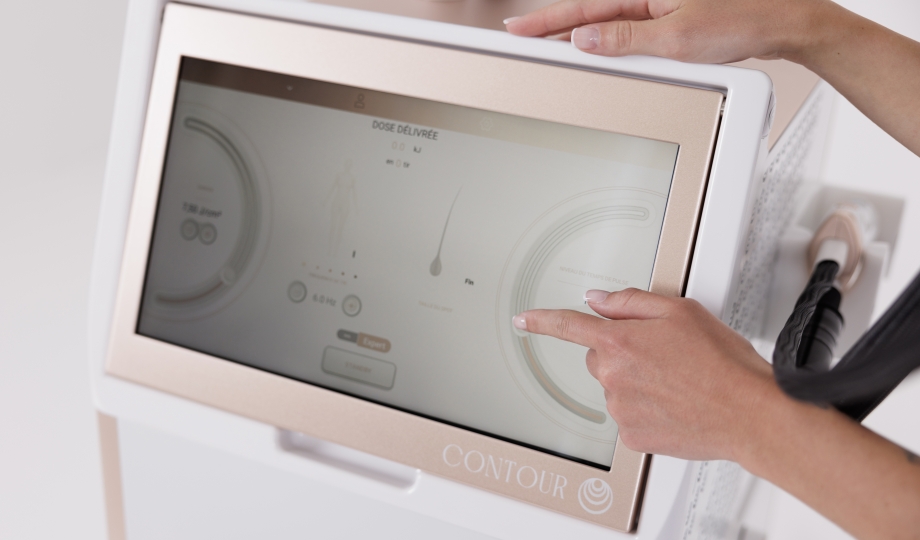
A confusing interface, endless menus, heavy or poorly balanced handpieces, protocols that are impossible to remember: all of these are sources of fatigue, handling errors, and wasted time between clients. Conversely, an intuitive interface, pre-set and customizable protocols, and integrated assistance for treatment settings mean optimized treatment-room time and rapid adoption by any new team member.
During the demonstration, do not remain a spectator: handle the device yourself, from the beginning to the end of a protocol. If you feel lost with the sales representative next to you, imagine being alone, on a Saturday at 6 p.m., with a client in a hurry lying on the treatment table.
15. Long-Term Support: You Are Buying a Partner, Not a Machine
Last criterion, and perhaps the most revealing of all: what happens after the sale?
The best manufacturers do not disappear once the payment has been received. They support you in developing your business: advice on treatment pricing, communication materials, ongoing training for your teams, device updates, and information on regulatory developments in the sector. Some even promote their partner centers through their own communication — a virtuous circle for your local visibility.
Ask professionals already equipped this question: “do you still hear from the manufacturer two years after purchase?” The answer is worth more than any sales pitch.
In Summary: The Wise Investor’s Decision Grid
As you will have understood, the right device is not necessarily the cheapest one, nor the most impressive one during a demonstration. It is the one that ticks all the boxes — compliance, robustness, safety, training, after-sales service, support — and matches your clientele and your business project.
One final piece of common-sense advice: take your time. An investment of several tens of thousands of euros deserves several meetings, visits to equipped centers, challenging questions, and documented answers. Serious manufacturers are not afraid of demanding buyers. They even prefer them: they are the ones who become their best ambassadors!