
Share



Career change: taking the CAP in beauty as an adult, the complete guide (duration, funding and career opportunities)
You have been thinking about it for months, perhaps even years. A meaningful profession, the human contact you miss behind your screen, the desire to work with your hands. And then the same question keeps coming back: “Is it really reasonable to start all over again at 32, 38 or 45?” Rest assured: you are not starting from scratch, far from it. The CAP in Beauty, Cosmetics and Perfumery was designed to be accessible to adults changing careers — with examination exemptions, accelerated formats and dedicated funding schemes. You still need to know which options are available, in what order to approach them and how to avoid the scheduling traps that can cost you an entire year. That is precisely the purpose of this complete guide!
If you are reading these lines, deep down, you already know the answer. But let us put it into words, because what adults are looking for when they take this step is remarkably consistent — and remarkably legitimate. First, meaning: doing a job whose results can be seen and felt, and which can immediately be read in the expression of a client rediscovering herself. Then, the human element: after years of spreadsheets, meetings and open-plan offices, returning to a profession based on contact, trust and almost intimacy — because a treatment room is one of the few places where people still genuinely take their time. Finally, freedom: beauty is one of the sectors in which independence is most accessible, whether working from home, renting a treatment room or eventually running your own salon.
And the market is following. According to Bpifrance Création, the beauty, cosmetics and perfumery sector included approximately 137,000 businesses in France in 2024, with a customer base that continues to broaden: men, younger people and pre-seniors are now integrating beauty treatments into their everyday lives. The industry outlook study published by OPCO EP confirms this momentum and highlights the growing importance of technical and personalised services — precisely the services that reward well-trained professionals. Changing careers and moving into beauty today does not mean entering a sector by default: it means entering a sector that is recruiting, transforming and rewarding expertise.
As for the qualities required, there is good news: your first career has probably already given you half of them. First, listening skills and a sense of service — the beating heart of the profession. Dexterity and an appreciation for precise movements, which can be developed. Rigour, particularly regarding hygiene, which is non-negotiable. Genuine scientific curiosity too, since skin biology and cosmetology form a significant part of the course. Finally, the commercial instinct that turns a good technician into a professional who earns a comfortable living from her work. If you recognise yourself in three of these five qualities, the rest can be learned — that is exactly what the CAP is for.
Let us begin with the question everyone asks: is this qualification genuinely essential? In the vast majority of cases, the answer is yes. Beauty is a regulated profession under the French Law of 5 July 1996 relating to the development and promotion of trade and craftsmanship. To provide beauty treatments legally, you must hold a recognised professional qualification — the CAP in Beauty, Cosmetics and Perfumery is the foundation — or demonstrate three years of professional experience in the occupation.
In practical terms, without a CAP, you cannot legally charge for hair removal, facial treatments or manicures. The CAP in Beauty, Cosmetics and Perfumery is a French Level 3 state qualification, awarded by the French Ministry of National Education and registered in the National Register of Professional Qualifications under reference RNCP39030. This official recognition makes it the key entry point into the sector — and, as we will see, makes it eligible for public funding schemes.
One distinction should be made from the outset, as it prevents a great deal of misunderstanding: it is possible to open a beauty salon without personally holding the qualification, provided that you employ a qualified professional, but you cannot personally perform the treatments. If your career-change project involves practising the profession — rather than simply managing a business — the CAP is your starting point.
Many adult candidates imagine that the programme will be light and almost decorative. The reality is more demanding — and that is a good thing, because it is what gives the qualification its value. The official curriculum, defined by the Order of 25 June 2018, is organised around three professional competency blocks.
The first block (EP1) covers beauty techniques for the face, hands and feet: beauty and wellness treatments and make-up, together with a theoretical foundation in skin biology that is more substantial than many people imagine. The course places considerable emphasis on understanding tissues, muscles, nails and the skin, as well as its main conditions. The second block (EP2) covers techniques relating to hair and nails: hair removal, nail treatments and make-up, and eyelash and eyebrow tinting. The third block (EP3) assesses the management of a beauty salon: customer relations, sales advice and participation in the day-to-day running of the establishment — a block in which adults changing careers, supported by the experience of their first profession, often perform exceptionally well.
This is where the adult route differs radically from the school route — and it is probably the most valuable information in this article. If you already hold a qualification at CAP level or above, such as another CAP, a BEP, a baccalauréat, a BTS or a university degree, you may be exempt from the general education examinations: French, history and geography, mathematics and physical sciences. You then take only the professional examinations. The exemption from physical education and sport must be requested when registering for the examination.
In practical terms, an adult who already holds a baccalauréat only needs to prepare for three examinations. This is what makes completing the CAP in one year — or even less — entirely realistic, whereas students in initial education generally spend two years preparing for it after the third year of secondary school.
There is no single route to the beauty CAP, but four, each with its own logic. The right choice depends on your professional situation, your budget and — honestly — your ability to study independently.
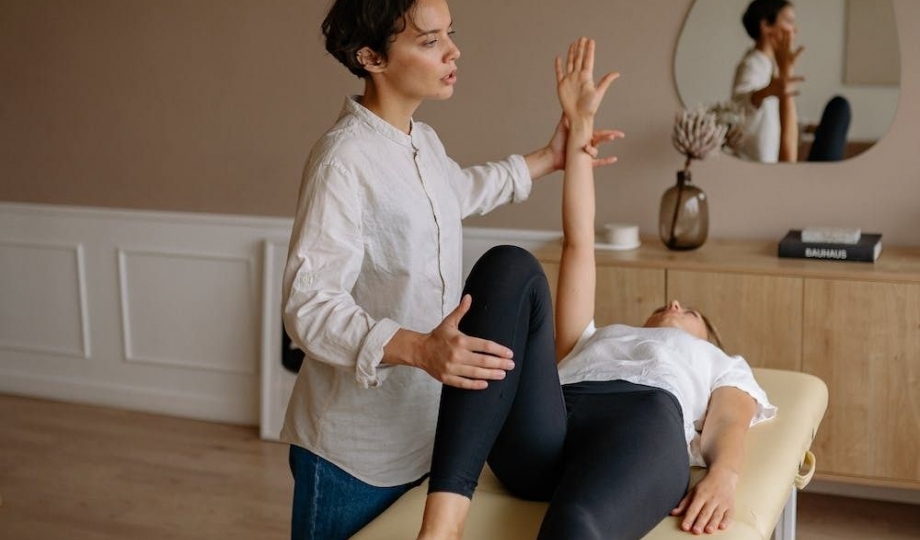
This is the most closely supervised route: daytime lessons, technical training facilities, available instructors and intensive practical training. Its advantage is obvious for a manual profession, but you must be able to make yourself available, which often means having left your job or using a professional transition scheme, as discussed below.
Popular with adults who train alongside their existing job, distance learning offers complete flexibility for the theoretical component. Its main point of vigilance is practical training: you are responsible for organising your own practice sessions, models, equipment and any work placements, because on examination day you will be performing treatments on a real person in front of a panel. This is a methodological point that too many candidates discover too late.
Although often seen as being reserved for young people, work-study training is also open to adults. An apprenticeship contract is available up to the age of 29 inclusive, with no age limit in certain circumstances, including recognised disabled-worker status or a business creation or takeover project requiring the qualification. Professionalisation contracts are available, among others, to jobseekers aged 26 and over, with no upper age limit. The advantage is twofold: the training is funded and you are paid throughout its duration.
This is the most economical and flexible format: you prepare for the examination at your own pace, independently or with support, and then sit the examinations like any other candidate. Registration takes place online once a year through the French Ministry of National Education’s national Cyclades portal, generally between October and November for examinations held the following spring.
Remember this scheduling detail, because it is unforgiving: if you miss the autumn registration period, you will have to wait a year. For someone changing careers, that represents twelve months of lost income and momentum. If your decision is taking shape in the spring or summer, set a reminder now — the exact dates vary between education authorities.
So, which route should you choose? Our belief, developed through contact with hundreds of people changing careers, is clear: if you are still employed, distance learning is by far the most intelligent option. It allows you to study the theory in the evenings and at weekends without sacrificing your income, test your project under real-life conditions before taking a leap into the unknown, and approach the Cyclades registration period several months ahead of schedule.
The key question is then the quality of the preparation — and this is where the market varies most widely. A great deal of online content consists of recycled PDFs and minimal support, but you do not become a beauty therapist simply by reading revision sheets. Specialist courses such as those provided by AFEEM are built around two complementary requirements: highly polished, carefully developed and educational distance-learning content — designed to teach a manual profession remotely, rather than simply revise for an examination — and expert in-person sessions led by highly qualified instructors using professional-quality equipment. In our view, this combination of in-depth theory studied at home and refined practical technique in a training facility is what separates a candidate who obtains the qualification from a professional who is ready to start working the following day.
Let us be honest: promises of completing a “CAP in three months” that circulate online owe more to marketing than to educational reality. For an adult who is exempt from the general education subjects, several hundred hours of preparation remain the norm for approaching the professional examinations confidently — most adult programmes therefore extend over six to twelve months. It is not the theory that takes time: it is developing the practical technique. The precision of hair removal, the fluidity of a treatment protocol and professional movements in front of an examination panel are all developed through repetition on real people.
Our experience-based advice is to build your schedule backwards from the examination date, in May or June, rather than forwards from the date on which you make your decision. Allow eight months of serious preparation, with at least one third devoted to practical work, and include a period of observation or experience in a salon wherever possible. Even when it is not administratively required for your candidate status, field experience makes a considerable difference on examination day — and even more so the following day, when you meet your first clients. Work-placement requirements vary according to your candidate status and education authority, so check the official guidance provided by your authority when registering.
Funding is often the decisive issue. The good news is that, because the CAP is a qualification registered with the RNCP, it is eligible for the main public vocational-training funding schemes.
Each year worked adds credit to your CPF — €500 per year for a full-time employee, capped at €5,000 in the standard situation. These entitlements can fund all or part of a beauty CAP preparation course provided by an approved training organisation. Since 1 April 2026, account holders must pay a compulsory fixed contribution of €150, except in certain cases, particularly for jobseekers.
This is the most powerful — and least well-known — scheme. The PTP, managed by regional Transitions Pro associations, allows an employee to take time away from her position to complete a qualifying career-change course while continuing to receive her salary during the training. The application must be prepared several months in advance and demonstrate the coherence of the project, but for a transition into beauty, it is the ideal route: you train full time without sacrificing your income.
If you are registered with France Travail, your adviser may be able to arrange individual training assistance or regional funding schemes that can be combined with your CPF. Employees who resign to pursue a genuine and serious career-change project may also, subject to eligibility requirements and prior approval of their project, receive unemployment benefits — a scheme that must be secured before resigning, never afterwards. Self-employed professionals also contribute to training funds that may be used.
This may be the best part of the story: the CAP does not open one door, but five, and you do not have to choose immediately. The France Compétences qualification profile lists a broader range of opportunities than many people imagine: independent and franchised beauty salons, spas, perfumeries, specialist centres, thalassotherapy establishments, treatment centres and residential facilities for older people.
This is the most common route after qualifying and probably the wisest for someone changing careers. An initial position in a salon, spa or perfumery allows you to consolidate your practical technique, experience the reality of the treatment-room schedule and observe from the inside how a successful establishment operates. Think of these first few months as the final stage of your training — except this time, you are being paid.
Home-based beauty services and independent treatment rooms appeal to many people changing careers, and with good reason: controlled start-up investment, complete organisational freedom and close customer relationships. It is often the ideal format for a second career that must remain compatible with family life — provided that you do not underestimate the entrepreneurial component, including legal status, pricing, customer retention and local communication.
This is the goal of many career-change projects, and it is entirely achievable — generally after two or three years of professional practice, allowing you to validate your market, positioning and personal contribution. Location, concept, equipment and financial forecasts deserve an article of their own, and we will shortly publish a complete guide on this blog.
Many professionals intelligently combine different formats: part-time employment for security and a home-based activity to build their customer base, before moving into full self-employment once their appointment books justify it. For someone changing careers who has family responsibilities, this is often the most reassuring route — and there is no reason to be embarrassed about it.
As we have seen, the market remains dynamic, driven by demand for personalised treatments and the growth of technical services.
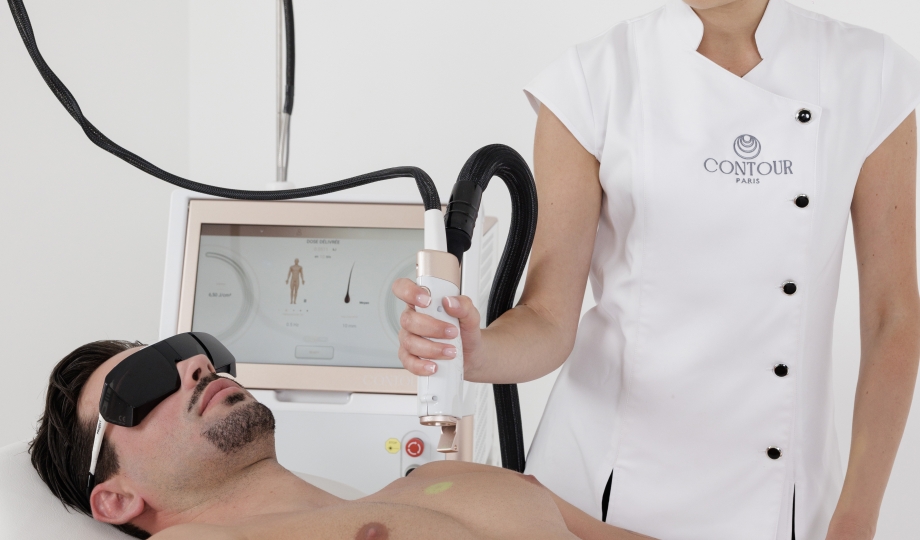
Nevertheless, let us be honest, because that is our role: the starting salary of a newly qualified beauty therapist is generally close to the minimum levels set by the industry collective agreement and therefore close to the French minimum wage. The difference in career trajectory comes afterwards — and often quite quickly. The beauty-industry outlook study published by OPCO EP describes a profound transformation in the skills expected: skin diagnosis, technologies such as intense pulsed light, radiofrequency and LED, and higher-value expert services. In other words, the CAP is your entry ticket; specialisation is the lift to the next level.
This is also the pattern followed by most of the successful career changes we observe: obtaining the CAP, gaining initial salon experience and then completing additional training in a technology or area of expertise, such as permanent hair removal, anti-ageing treatments or body treatments, to move upmarket and increase both skills and income. Your first career is not a disadvantage in this process: the interpersonal maturity, rigour and commercial awareness acquired elsewhere are precisely what salon managers are looking for.
Let us finish with what we wish someone had told us. The first mistake is missing the autumn Cyclades registration period — that means losing a year, with no appeal. The second is neglecting practical work and focusing entirely on theory; the professional examinations are won or lost through technique. The third is resigning before securing funding, even though both the PTP and the resignation-for-career-change scheme require advance planning. The fourth is selecting a training provider without checking that it holds Qualiopi certification and that the course leads to the state qualification RNCP39030 — a condition for public funding. The fifth and final mistake is treating the CAP as an end point when it is only the beginning. The professionals who thrive — and earn a comfortable living from this occupation — are those who build a specialisation pathway from the outset.
Changing careers and moving into beauty as an adult is neither a whim nor an unreasonable gamble: it is a project that is clearly defined by legislation, eligible for funding and supported by a growing sector. What it requires is method. You have just laid the first stone.
Yes, there is no maximum age. The beauty CAP is open to any adult, whether completing a training course or registering as a private candidate. For the latter route, you must be an adult by 31 December of the examination year. Adults changing careers represent a significant proportion of candidates each year.
An adult who already holds a qualification at CAP level or above is exempt from the general education examinations and only prepares for the three professional examinations. Most adult programmes last between six and twelve months, compared with two years through the conventional school route.
Yes. The CAP in Beauty, Cosmetics and Perfumery is a state qualification registered with the RNCP, making it eligible for the Personal Training Account when prepared through an organisation listed on Mon Compte Formation. Other options include the Professional Transition Project for employees, France Travail assistance for jobseekers and work-study training.
Yes. Registration takes place online through the Cyclades portal, once a year, generally between October and November, for examinations held in the spring. You take exactly the same examinations as candidates enrolled in schools.
Candidates who hold a qualification at the same level as or above the CAP, including another CAP, a BEP, a baccalauréat or a higher-education qualification, may be exempt from the general education examinations — French, history and geography, mathematics and science. The physical education exemption must be requested during registration. The precise arrangements are set out in the guidance issued by your education authority.
If you are still employed, distance learning is the most suitable option: you can study the theory at your own pace without sacrificing your income. The decisive criterion is the quality of the preparation. Choose an organisation whose distance-learning content is genuinely educational and which provides in-person practical sessions with experienced instructors and professional equipment — this is the model used by AFEEM.
The CAP opens up several routes that can be combined over time: employment in a salon, spa or perfumery to consolidate your practical experience, self-employment in a treatment room or from home, opening your own salon after a few years of experience, or adopting a mixed model. The most effective way to move upmarket and increase your income is through specialisation: beauty technologies such as permanent hair removal, radiofrequency and LED, expert treatments, and potentially a Brevet Professionnel or BTS qualification to progress into management or training.
Share






























































Vos informations ont bien été mises à jour.
Cette fenêtre se fermera automatiquement dans quelques secondes...
Cette fenêtre va se fermer automatiquement dans 3 secondes...
Veuillez saisir l'adresse email rattaché à votre compte client pour recevoir un lien de réinitialisation de votre mot de passe.
Vous pouvez maintenant commander et suivre vos commandes. Cette fenêtre va se fermer automatiquement dans 5 secondes...