
Share


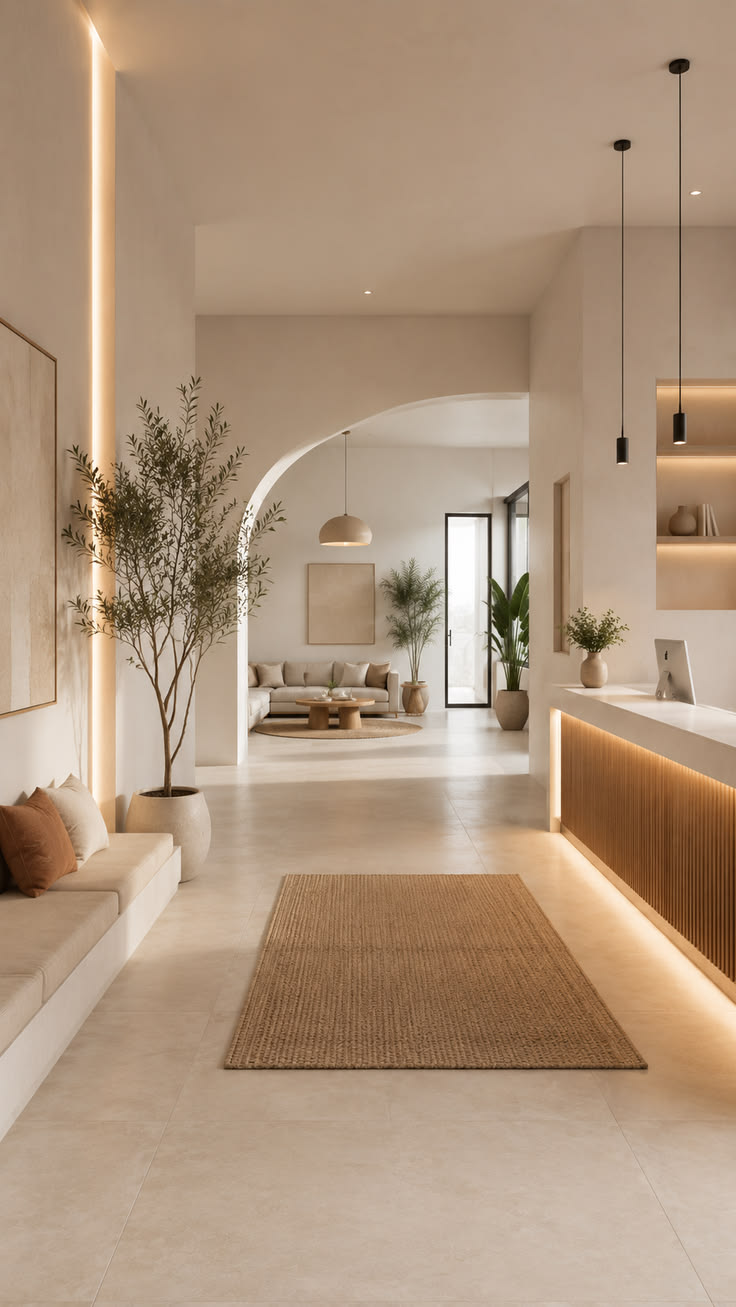
Beauty salon premises: how to choose the ideal location when starting out (complete guide + checklist)
Choosing the ideal premises is undoubtedly one of the most significant decisions in your entire project, and one of the most difficult to change afterwards. A treatment protocol can be improved, a treatment menu can be redesigned and a device can be replaced. Poor premises, however, must be endured for the entire duration of a lease. Conversely, a good location works for you every day, silently bringing potential clients past your window without you having to convince them to come. So before falling in love with a shopfront — because yes, it happens, and that is precisely the trap — let us methodically review everything you need to check: the location, the floor area, the lease, the building work and the budget. We will finish with the checklist of 15 questions to ask before signing anything. Let’s get started!
Let us begin by dispelling a common misconception: the best premises are not the most beautiful, or even the best located in absolute terms. They are the premises whose catchment area — the actual area from which your clients will travel — matches your positioning. A permanent hair-removal salon selling packages across several sessions can attract clients willing to drive for twenty minutes; a nail bar depends on immediate passing trade. These are two different business models requiring radically different locations, and your treatment menu must determine the address, never the other way around.
To assess this area objectively, do not rely solely on instinct: the data exist and are publicly available. INSEE provides detailed neighbourhood-level demographic data covering age, income and household composition, while Bpifrance Création explains the complete methodology for a commercial location study. Your local chamber of commerce and industry also provides footfall data and commercial-potential studies — an appointment that costs little and can prevent mistakes that cost a great deal.
On the ground, nothing replaces observation. Visit the premises on a Tuesday morning, a Thursday at 6 p.m. and a Saturday at 3 p.m. Count the people passing by, look at who they are and observe the neighbouring businesses: a pharmacy, a high-quality bakery, a gym or a medical practice are excellent neighbours — they generate recurring, qualified footfall. A row of empty shop windows, by contrast, tells a story that the estate agent will not tell you.
What about the competition? Counterintuitively, a competing salon nearby is not always bad news: it proves that people in the area purchase beauty services. What matters is your differentiation — if you arrive with technology-based services that local competitors do not provide, you are not dividing the market; you are expanding it.
Let us discuss the issue that everyone underestimates and every experienced salon owner places at the top of the list: parking. A client attending a permanent hair-removal session or body treatment will remain for between thirty minutes and an hour and a half. If she must drive around for ten minutes looking for a space and then monitor the parking meter during her treatment, your “relaxation” experience is over before it has begun — and so is her likelihood of booking again. Check the situation in practice: are there time-limited free-parking spaces outside or within a three-minute walk? Is there a public car park nearby? How difficult is parking during the hours when you will work, including Saturdays?
Next comes visibility. A ground-floor shop window on a busy road is free, permanent and precisely geolocated advertising. First-floor premises or premises at the back of a courtyard can work — many premium salons even cultivate this discretion — but understand the trade-off: without a shop window, every client must be acquired through your communication. The lower rent of an upper-floor unit is paid for through your marketing budget. This is not necessarily a bad calculation, but it is one that must be made consciously.
Finally, accessibility in the broadest sense: proximity to public transport and ease of access with a pushchair or wheelchair — we will return to this point, because it is also a legal obligation.
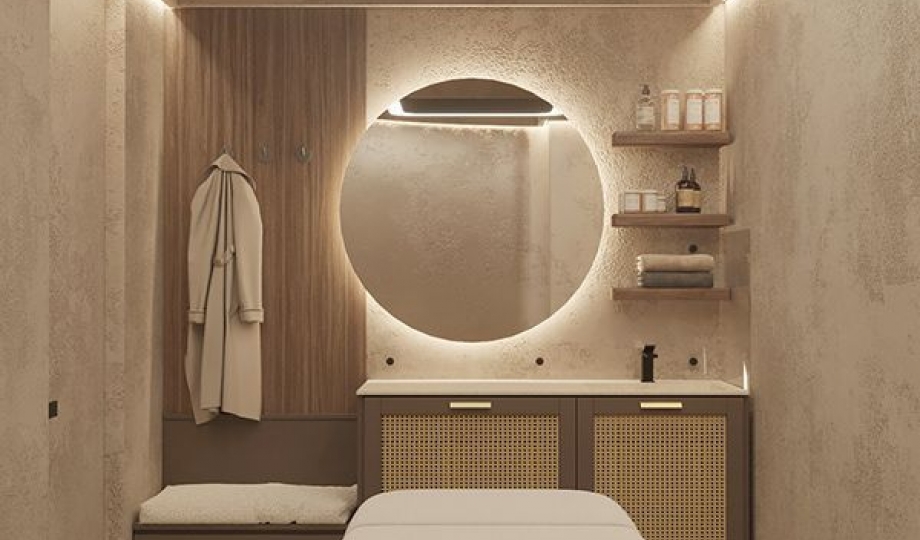
The right floor area is not guessed; it is calculated from your treatment menu. Based on our experience of supporting numerous salon openings, allow around ten square metres per treatment room to work comfortably — more for a room containing a large technology-based device, its circulation area and its treatment chair. Add a reception and waiting area, which is also your retail-product area and should never be sacrificed, a water point and toilets, storage and preparation space, and a staff changing area or private corner if you plan to recruit.
In practical terms, a well-designed single-room salon with a focused activity can operate within 30 to 40 square metres. A salon with two or three treatment rooms and a genuine reception area is more likely to require between 50 and 80 square metres. Beyond that, you enter the realm of team-based operations, with a different management model.
The classic trap is planning around your first-day activity rather than your third-year activity. If your plan includes adding a technology such as radiofrequency, LED or permanent hair removal in year two, the corresponding treatment room must exist — or be capable of existing — from the moment you sign. Moving a salon costs infinitely more than securing a few extra square metres in advance. It is exactly the same reasoning as choosing a device: you are not purchasing for today; you are investing in your future trajectory.
This is the least glamorous and most decisive part of this guide. The standard French commercial lease — the famous “3-6-9” lease — commits you for nine years, with the option to terminate at three-year intervals. It provides valuable protection, including a right to renewal and rules governing rent reviews, but it is also a long-term commitment in which every clause deserves careful consideration, ideally with the support of a legal professional. Take a look at this article about commercial leases on the official Entreprendre.Service-Public.fr website.
There are three points of particular importance for our profession. First, the permitted-use clause: this defines the activities authorised within the premises. A lease drafted for a “retail business” does not automatically permit beauty treatments; some co-ownership regulations may even restrict customer-facing activities or the use of equipment. Check that the permitted use explicitly covers beauty treatments and wellness services — discovering otherwise too late is one of the most frequent and painful situations encountered by the business founders we support.
Next, service charges and building work: who pays for what? Since the Pinel Law, a precise inventory of charges must be attached to the lease, while major repairs covered by Article 606 of the French Civil Code are the landlord’s responsibility. Make sure the lease does not attempt to transfer obligations to you that are not legally yours.
Finally, consider the true entry cost: in addition to rent, you may need to pay a security deposit, possibly a lease-assignment payment or key money, professional fees and a personal guarantee, which a landlord will frequently require from a newly created company. The advertised rent is never the total cost of the premises.
Beauty salon premises are not like ordinary commercial premises. Three specific areas must be assessed before signing, because they can turn an attractive rent into a financial pit.
Ideally, every treatment room should have its own water point. If the premises have only one water supply at the back of the shop, obtain a quotation for creating the required network. Electricity is the second critical area, and the most underestimated: technology-based devices such as permanent hair-removal systems, radiofrequency and cryolipolysis machines require dedicated circuits and a power capacity that the electrical system of a former clothing shop was never designed to provide. Ask an electrician to inspect the premises with the technical specifications of your future equipment before signing — not afterwards. Finally, consider ventilation and air conditioning: a treatment room is a small enclosed space in which people work all day. Thermal comfort is not a luxury; it is an operating requirement for both your clients and your equipment.
A beauty salon is an establishment receiving members of the public, known in France as an ERP, and is generally classified in category 5 because of the number of people it accommodates. This creates obligations relating to fire safety and, above all, accessibility for people with disabilities: the premises must be accessible or undergo compliance work, and you must make a public accessibility register available. If you modify the shopfront or the interior layout of an ERP, authorisation for the work must be obtained from the town hall. A step at the entrance, cramped toilets or a narrow corridor are all points that must be negotiated — or ruled out — before signing.
Washable flooring and work surfaces, an area for cleaning and storing equipment, and appropriate management of clean and used linen: the hygiene requirements applicable to beauty treatments shape the layout of the premises. The French consumer-protection and fraud-control authority, the DGCCRF, regularly inspects beauty businesses. Designing the layout around hygiene from the outset costs less than correcting it after an inspection.
Resist the temptation of relying on magic figures: the cost of premises can vary fivefold depending on the town, the street and the condition of the property. What does not vary is the structure of the budget, and this is what you must control. Your “premises” budget consists of six categories: entry costs, including the security deposit, any lease-assignment payment or key money and professional fees; technical work involving water, electricity and ventilation; fitting-out and decoration, including the treatment rooms, reception and shop window — in other words, your brand image; compliance work relating to accessibility and safety; the first few months of rent before the business gains momentum; and a contingency reserve — building work always reveals surprises.
The golden rule we repeat to every business founder is that the premises must never consume the equipment budget. A magnificent salon without differentiating technology is an attractive shell forced to compete on basic, less profitable services. A restrained, well-located premises with a strong technical platform is preferable to the opposite. To construct your complete financing plan and compare it with industry ratios, Bpifrance Création’s guide to the initial financing plan is the reference.
Print this list and take it with you to every viewing:
Let us finish with the question we are asked during every support programme. Ground-floor premises with a shop window remain the premium option for capturing passing trade and building local awareness; they also command the highest rent. An upper-floor unit or a property at the back of a courtyard often halves the rent and can work very well for a high-value, appointment-based activity such as permanent hair removal or technology-based treatments, where clients come specifically for you rather than because they see the window — but it requires a genuine digital-acquisition budget and flawless signage. A shopping centre, finally, provides guaranteed footfall and parking in exchange for high rents and service charges, imposed opening hours and a more volatile customer base. None of these three options is inherently superior: the right one is the option that aligns with your treatment menu, average transaction value and customer-acquisition model. Your project chooses the premises. Never the other way around.
It depends entirely on the treatment menu: a single-room salon can operate within a well-designed 30 to 40 m², while a salon with two or three treatment rooms and a reception and retail area generally requires between 50 and 80 m². The essential point is to size the premises for your activity in three years’ time, including space for future technology-based equipment.
Yes. A salon that receives clients is an establishment receiving members of the public, generally classified in category 5 in France. This entails safety and disability-access obligations, the maintenance of a public accessibility register and authorisation from the town hall for building work when the layout or shopfront is modified.
It is not a legal requirement, but it is a major commercial factor: for treatments lasting from 30 to 90 minutes, ease of parking has a direct effect on customer retention. Check the real availability of spaces within a three-minute walk during the hours and days when you will work, including Saturdays.
The three areas specific to the profession are water, ideally with one water point per treatment room; electricity, including dedicated circuits and sufficient capacity for technology-based equipment; and ventilation and air conditioning. You must also consider accessibility compliance, surfaces suited to hygiene requirements and the fitting-out of the treatment rooms. Obtain formal quotations for these items before signing the lease.
Prioritise three clauses: the permitted use of the premises, which must explicitly authorise beauty treatments; the division of charges and work between the landlord and tenant; and the financial conditions on entry, including the security deposit, any lease payment and personal guarantees. Having a legal professional review the lease before signing is an investment, not an expense.
A ground-floor unit with a shop window maximises passing trade and local awareness, at the cost of a higher rent. An upper-floor unit substantially reduces the rent and suits high-value appointment-based activities, provided that the lack of a shop window is compensated for by a strong digital-acquisition strategy. The right choice depends on your positioning and average transaction value.
Share






























































Vos informations ont bien été mises à jour.
Cette fenêtre se fermera automatiquement dans quelques secondes...
Cette fenêtre va se fermer automatiquement dans 3 secondes...
Veuillez saisir l'adresse email rattaché à votre compte client pour recevoir un lien de réinitialisation de votre mot de passe.
Vous pouvez maintenant commander et suivre vos commandes. Cette fenêtre va se fermer automatiquement dans 5 secondes...