
Share



Changing careers is never an insignificant gamble. But if there is one sector where that gamble has a good chance of paying off, it is beauty: a sector that recruits, remains largely protected from automation because it relies on human contact and hands-on expertise, and offers genuine freedom of career path ( employment, setting up your own business, technical specialisation...). The key to entering it has a precise name: the CAP Esthétique Cosmétique Parfumerie, the reference qualification recognised by the French State for practising this profession.
However, behind this promise of a successful career change lies a more nuanced reality: not all training courses are equal, not all formats suit every situation, and success in the examination must be prepared well before the big day. This guide takes stock, step by step, of what you really need to know before getting started.
Let us begin by clearing up a legitimate doubt: does this sector really recruit? Industry figures clearly answer yes. According to the overview of the beauty-cosmetics-perfumery sector published by OPCO EP, the sector includes more than 16,600 employer establishments in France and nearly 46,000 employees, and almost three businesses out of ten report an intention to recruit. Another revealing figure: 67% of employees in the sector are under 35, making it a young and dynamic sector in which 84% of positions are permanent contracts, far from the image of insecurity sometimes associated with service professions.
This momentum can also be explained by a long-term trend documented by INSEE: the share of the budget that French households devote to personal care has almost quadrupled since 1960, rising from 8.8% to more than 32% of the household budget devoted to physical appearance. In other words, demand for professional beauty treatments is not a passing trend: it is a consumption trend that has been established for decades and continues to grow.
Finally, unlike an in-house training course with no recognition on the labour market, the CAP Esthétique Cosmétique Parfumerie is an official Level 3 qualification, awarded by the French Ministry of National Education and registered in the National Register of Professional Certifications under code RNCP39030. This recognition is not an administrative detail: it is what allows you to set up your own business, be employed in a beauty salon, perfumery, spa or parapharmacy, or continue afterwards towards a BP or BTS qualification in beauty.
Once the decision has been made, a very practical question arises: in what format should you follow this training? Three main formats coexist, each with its own advantages depending on your personal and professional situation.
This is the format that has grown the most in recent years, particularly because it is compatible with salaried employment, family life or geographical constraints. The theoretical learning is completed online, at your own pace, with no timetable constraints or requirement for daily physical attendance. The advantage is obvious: you keep your current income during your career change. The trade-off is just as clear: it requires genuine self-discipline and means compensating for the absence of a classroom with well-structured practical periods, a point we return to just below.
This hybrid format combines distance-based theory and in-person practical sessions, generally organised in blocks of a few days. It allows you to retain the flexibility of distance learning for the theoretical part (often the largest part) while ensuring compulsory supervised practice in a training centre, which is essential for technical movements that a video alone cannot fully teach. Today, it is the most recommended format for an adult changing careers: it balances professional constraints with the practical demands of a manual profession.
Historically the reference route, particularly for students in initial training leaving lower secondary school, full-time in-person learning remains relevant for anyone who can make themselves available several days a week over a long period. It provides daily supervision and useful group dynamics for some profiles, but is, in practice, more difficult for an adult changing careers to combine with a job or family constraints.
Choosing the format is actually only the first step. The criterion that most determines your success (and your confidence on the day of the practical examination) is the genuine depth of the teaching content offered by the training centre. On this point, not all providers are equal, far from it.
A few simple questions make it possible to sort them out. How many hours of training are actually offered, beyond the marketing claim of a “qualification in a few weeks”? Is the video content designed for genuine learning of technical movements, or is it limited to static recordings of classroom lectures? Finally, does the practical part, the most difficult aspect to deliver remotely, include genuine support in a training centre, with enough days to make progress on the technical movements assessed during the examination?
The CAP Beauty course offered by AFEEM, Contour Paris's training partner, is a good example of what a programme designed around these criteria can look like: more than 500 hours of content accessible remotely and at your own pace, built around practical videos filmed using modern professional equipment, far from the dated screen recordings still found with some providers, and an in-person practical component whose duration adapts to each person's profile, from 2 to 10 days depending on the option chosen. This flexibility allows an already experienced candidate to focus on the technical points she is missing, while a complete beginner can choose the most comprehensive option to secure her preparation for the practical examination.
Beyond the choice of training, a few simple habits make a real difference between preparation that leads to success and preparation that drags on.
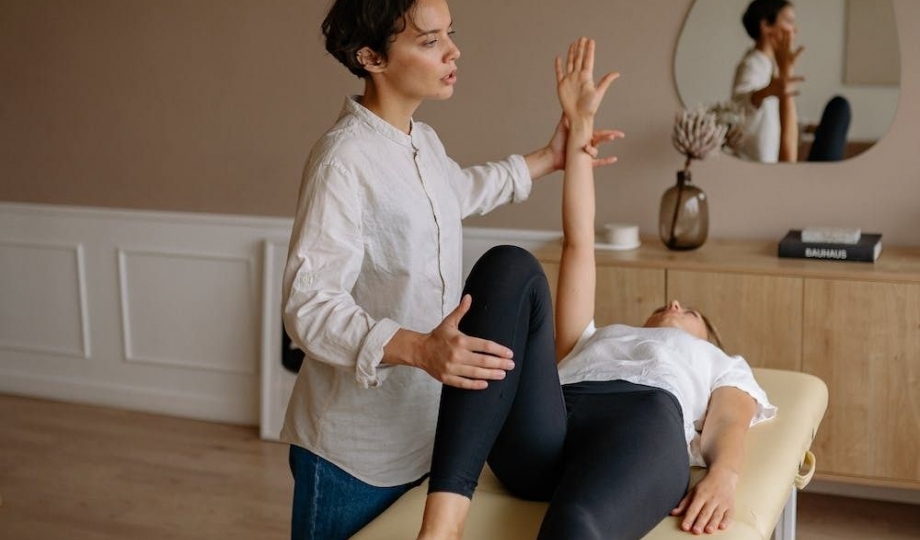
The most common mistake among career-change candidates is to consider the time between two practical sessions as simple waiting time. In reality, it is the most strategic part of the preparation. Film yourself reproducing the movements seen during the session: it is often by watching yourself that you notice what a mirror does not show you in the moment. Practise on real models whenever possible rather than only on mannequins ( the texture of real skin, managing time with a person who talks or moves slightly, all of this cannot be learned in theory). Finally, keep a technical-skills notebook in which you note, after each session, what caused difficulty: this notebook will become your revision plan before the examination.
Here is one point that many candidates discover too late: registering with a training centre, even remotely, does not in any way constitute registration for the examination. These are two completely separate procedures. Official registration for the CAP as an independent candidate takes place each year, directly with your education authority, via the national Cyclades platform. The registration period generally takes place between October and November, for examinations held between April and June of the following year.
Make a careful note of the registration opening date from the start of the school year in September: places in examination centres and administrative deadlines leave little room for error, and forgetting this step means having to wait a full year before trying again. Once registered, keep your examination notice carefully, available directly in your Cyclades account a few weeks before each examination.
On the day of the practical examination, technique is not enough: time and stress management matter just as much. Prepare your equipment the night before, following the list provided by your education authority carefully, as forgetting equipment can penalise you from the first few minutes. Arrive early enough to set up your workstation without rushing: most examiners pay as much attention to organisation and workstation hygiene as they do to the technical movement itself. Finally, in the weeks beforehand, practise completing your treatments within the exact time allowed for the examination: underestimating the pressure of the clock is one of the most common causes of failure, even when the technique itself is perfectly mastered.
Once you have the qualification, several paths open up, and this is precisely what makes this profession so rich. Many choose salaried employment in a beauty salon, spa or perfumery to consolidate their experience before, potentially, setting up their own business. Others specialise quickly in a technology or treatment, a step that allows them to stand out from the first months of practice.
The CAP Beauty qualification is therefore not an end point, but a solid starting point: the regulatory foundation that opens every door, after which it is up to you to build, training course after training course, the expertise that will make the real difference to your future clientele.
Share


























































Vos informations ont bien été mises à jour.
Cette fenêtre se fermera automatiquement dans quelques secondes...
Cette fenêtre va se fermer automatiquement dans 3 secondes...
Veuillez saisir l'adresse email rattaché à votre compte client pour recevoir un lien de réinitialisation de votre mot de passe.
Vous pouvez maintenant commander et suivre vos commandes. Cette fenêtre va se fermer automatiquement dans 5 secondes...