
Share



Selling a treatment programme in a beauty salon: the 10 questions that make all the difference
You know your protocols inside out. Your equipment is running, your techniques are confident. And yet, when it comes to recommending a treatment programme rather than a one-off session, something gets in the way, as though “selling” somehow betrayed your role as a care professional… The discomfort sets in and the client often leaves having booked just one treatment. The good news is that what turns a client towards a programme happens long before she enters the treatment room, during the discovery appointment. And it all comes down to the way you ask questions.
Because a treatment programme should never be forced: it should reveal itself. When a client becomes aware, by herself, of the gap between where she is today and where she dreams of being, the programme stops feeling like an expense and becomes THE obvious solution. In this guide, we go through the 10 questions that transform a simple conversation into an assessment, an assessment into a project, and a project into long-term commitment, all within a completely fair and transparent framework.
Before talking about discovery techniques, let's establish what is at stake. A one-off treatment means a temporary result and a client who leaves without any real reason to return. A treatment programme offers three benefits at once: genuine and lasting results (most aesthetic protocols only make sense when repeated), a loyal client who makes your salon part of her routine, and financial visibility for you, with anticipated rather than unpredictable revenue.
This last point is far from insignificant. Retaining an existing client structurally costs less than acquiring a new one. A well-sold programme is therefore not simply “a big sale”: it is the beginning of a relationship. And that relationship begins with a genuine assessment, just as it does with any serious slimming protocol.
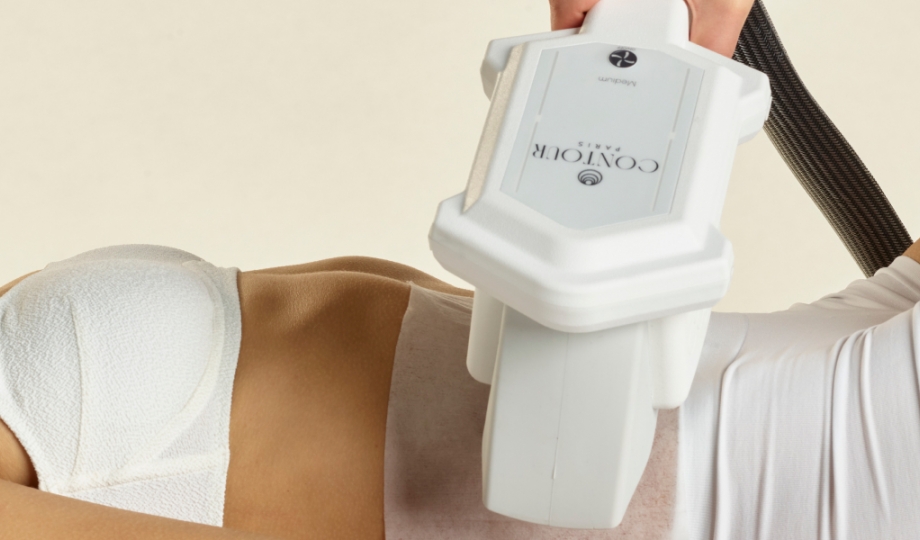
Most unsuccessful sales have the same origin: presenting a machine (“I have an amazing cryolipolysis device”) instead of listening to a person. Your client does not want radiofrequency or waves: she wants to fit into her jeans, feel good in a dress and stop avoiding mirrors. Your role is to build the bridge between her objective and your expertise.
This is where the discovery process becomes strategic. Good questioning achieves three things at once: it builds trust (you are interested in her, not her bank card), it qualifies the need (you will know what to recommend and why), and it allows the decision to mature in her own mind. This skill, consultative selling, is a genuine profession in itself and always relies on a structured assessment.
A rushed assessment leads to a rushed sale. Before asking even the first question, take care of the setting. Schedule dedicated time in a calm environment, away from treatment-room noise and ringing phones. Seat your client comfortably at eye level, never in a position that makes her feel inferior. Have a discovery form ready, either on paper or on a tablet: it structures the conversation, demonstrates your professionalism and provides a record for the future.
Above all, adopt the right mindset: you are not there to sell, but to understand. This subtle difference changes everything and can immediately be heard in your voice and seen in your expression. A client who feels listened to naturally lowers her defences.
None of these questions is about equipment or price. They are about her. Ask them in this order, allow silence to do its work and note every answer.
The opening question is never insignificant. What it reveals: the surface-level motivation. How to follow up: do not stop at the first answer (“I'd like to lose a little around my stomach”), because that is rarely the real issue. Gently explore further.
What it reveals: a projected, emotional and time-specific objective. How to follow up: you have just allowed a treatment programme to emerge. Three months is precisely the timeframe of a protocol, and she is the one who defined it.
What it reveals: her history, frustrations and misconceptions. How to follow up: you position yourself as the professional who will finally approach things correctly where previous attempts on her own failed.
What it reveals: her self-perception, which is often much harsher than reality. How to follow up: this is the ideal moment to introduce an objective assessment that gently reframes the situation and establishes your expertise.
What it reveals: the true emotional trigger — the beach, photographs, intimacy. How to follow up: this is the beating heart of her motivation. Always connect your recommendation to this specific moment.
What it reveals: the underlying context and the fact that one treatment alone may not be enough. How to follow up: you justify a more complete approach — programme plus lifestyle advice — which is far more valuable and sustainable than a single session.
What it reveals: her availability and level of commitment. How to follow up: you create a protocol she can genuinely follow. A programme abandoned halfway through means a lost client, not a successful sale.
What it reveals: a wedding, holiday or event, and therefore the urgency and pace required. How to follow up: a date allows you to plan the programme backwards. The deadline creates commitment without you having to apply pressure.
What it reveals: safety, which is non-negotiable. How to follow up: far from being an obstacle, this question reinforces your professionalism. A practitioner who checks inspires infinitely more trust than a salesperson in a hurry.
What it reveals: her hierarchy of priorities, invaluable information for building your offer. How to follow up: you adapt the formula — intensive, extended or premium — to what she genuinely values. Price only appears here, at the very end, without creating friction.
One note: these questions can be adapted depending on the programme being considered. For cellulite or anti-ageing concerns (internal links), you would explore the client's background and history in greater depth.
The golden rule of the discovery appointment can be summed up in one sentence: your client should speak twice as much as you do. Allow silence (it encourages her to elaborate), rephrase her words (“if I understand correctly, what affects you most is…”), and observe body language, both hers and yours. A client who leans forward, goes into detail or sighs is giving you clues about where the real issue lies. Listening is not simply politeness: it is your best sales tool.
Once you have the answers, do not immediately pull out a catalogue. First summarise: “If I understand correctly, your objective is X by this date, and what matters most to you is Y.” This summary is incredibly valuable: it proves that you listened and secures agreement before the programme has even been discussed. Only then should you present a clear protocol linked to her objective, with a beginning, an end and expected results. One clear recommendation, not three options that overwhelm her.
When it comes to price, establish the value before giving the figure: talk about the result, number of sessions and support before announcing the amount. If necessary, offer payment in instalments rather than a discount. A discount devalues the programme — and your work — whereas payment flexibility removes an obstacle without cheapening anything.
An objection is not a refusal; it is a request for reassurance. The three classics are:
Selling a treatment programme, yes; misleading a client, never. Beyond ethics, it is the law. The DGCCRF strictly regulates commercial practices: information must be clear and fair, there must be no abusive pressure and no misleading promises of results. Advertising “10 kg guaranteed” or hiding the real price may constitute misleading commercial practices. The good news? The method described in this guide, based on genuine needs and an honest assessment, naturally keeps you on the right side of the rules. Transparency is not an obstacle to selling: it is what makes the sale strong and sustainable.
The sale does not end with the final session: that is where the next stage begins. From the penultimate appointment onwards, review the results achieved and discuss what comes next — a maintenance programme, a new objective or a seasonal treatment. A satisfied client who leaves without another appointment booked represents only half a successful retention strategy. Expectations vary between generations: younger clients, for example, value personalisation and continuous contact, as explained in our article Generation Z in beauty salons: expectations, beauty and loyalty.
Start from the client's needs, never from your offer. When the programme responds to an objective she has expressed herself, the recommendation becomes obvious and does not feel intrusive.
Around ten well-chosen questions are enough. It is not the number that matters but the listening: allow pauses and follow up on each answer.
At the end, once the need has been qualified and the objective agreed. The price should be presented as the logical consequence of a solution, never as the starting point.
Return to the value: cost per session, expected result and durability. A “price” objection often hides a “trust” or “priority” objection that your earlier questions should already have helped address.
Yes, provided that you respect fair consumer information and the commercial-practice framework established by the DGCCRF: clear pricing, no misleading promises and no abusive pressure.
Yes: it objectively establishes the need, strengthens your professional credibility and transforms a vague desire into a concrete project. It is the foundation of successful consultative selling.
Share

































































Vos informations ont bien été mises à jour.
Cette fenêtre se fermera automatiquement dans quelques secondes...
Cette fenêtre va se fermer automatiquement dans 3 secondes...
Veuillez saisir l'adresse email rattaché à votre compte client pour recevoir un lien de réinitialisation de votre mot de passe.
Vous pouvez maintenant commander et suivre vos commandes. Cette fenêtre va se fermer automatiquement dans 5 secondes...