
Share


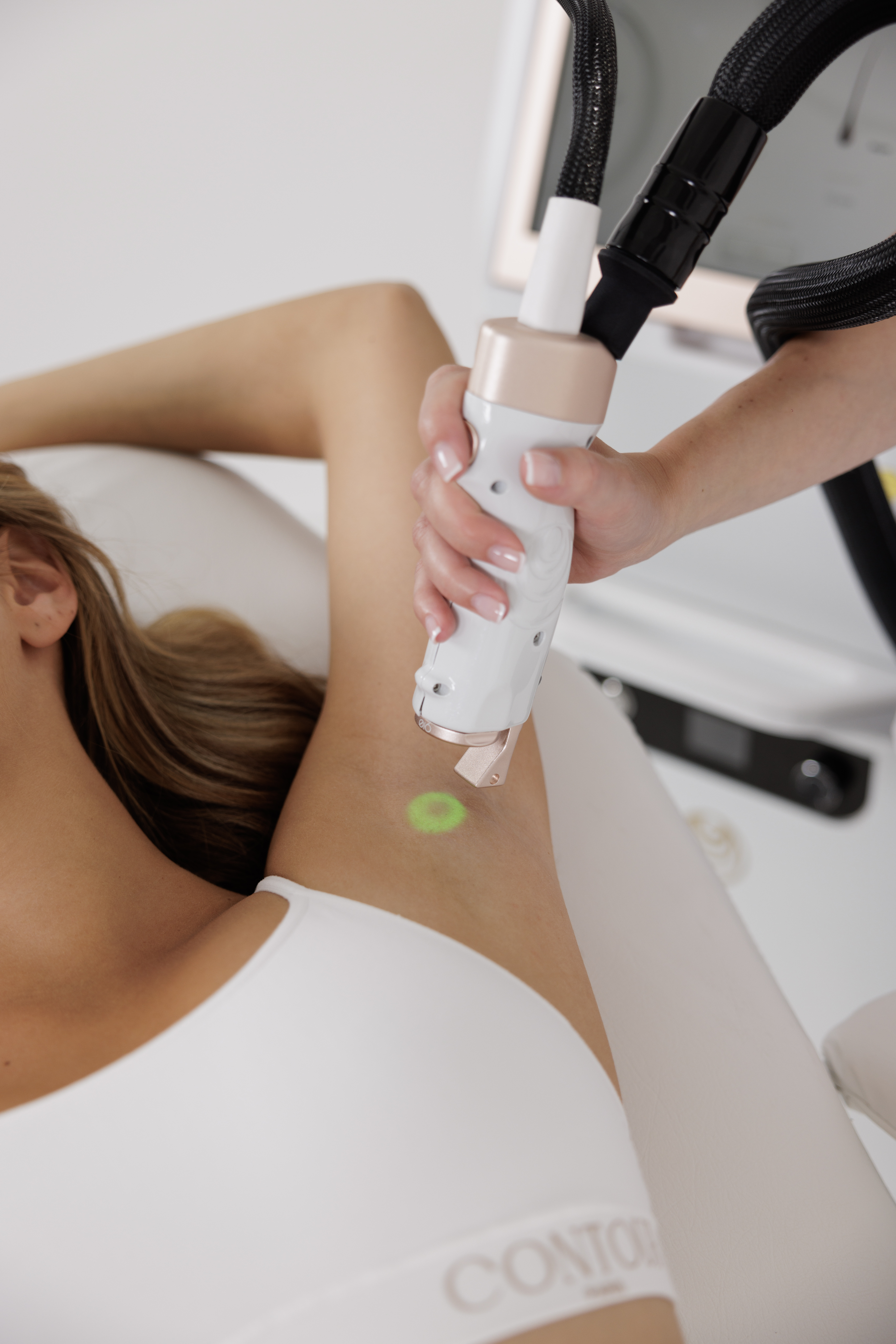
Alexandrite 755, diode 808, Nd:YAG 1064… If you've ever browsed through a laser hair removal brochure, you've probably felt like you were reading lottery numbers. But these figures aren't just there for decoration: wavelength is the DNA of a laser. It determines which skin types it can treat, how deeply it penetrates, its level of safety… and even how much it will cost you in maintenance!
Since laser hair removal became accessible to trained beauty professionals in France under Decree No. 2024-470, this question is no longer theoretical. It's a real investment decision. Yet, in a market where most manufacturers rely on the same established wavelengths, Contour Paris has taken a different approach with the Clinical Skin Laser: 785 nm.
A niche choice or a stroke of genius? We'll explain, with a diagram to illustrate, why these few nanometers make a real difference in the treatment room.
The principle is based on selective photothermolysis, described in 1983 by two Harvard researchers, Rox Anderson and John Parrish. A laser emits highly concentrated light of a single wavelength. This light is primarily absorbed by a specific target called a "chromophore". In hair removal, that target is the melanin in the hair.
Once absorbed, the light energy is converted into heat. This heat travels along the hair shaft to the structures responsible for hair production, which it neutralizes. The French Society for Lasers in Dermatology summarizes the principle as follows: the objective is to thermally destroy the hair's germinative structures without damaging the surrounding skin structures.
All light travels in waves. Wavelength, measured in nanometers (nm, or one billionth of a meter), determines its "color". The visible spectrum ranges from violet (approximately 400 nm) to red (approximately 700 nm). Beyond that lies near-infrared light, invisible to the naked eye, where most hair removal lasers operate.
Two physical principles govern the rest:
The real challenge for laser designers is finding the right balance between these two opposing factors.
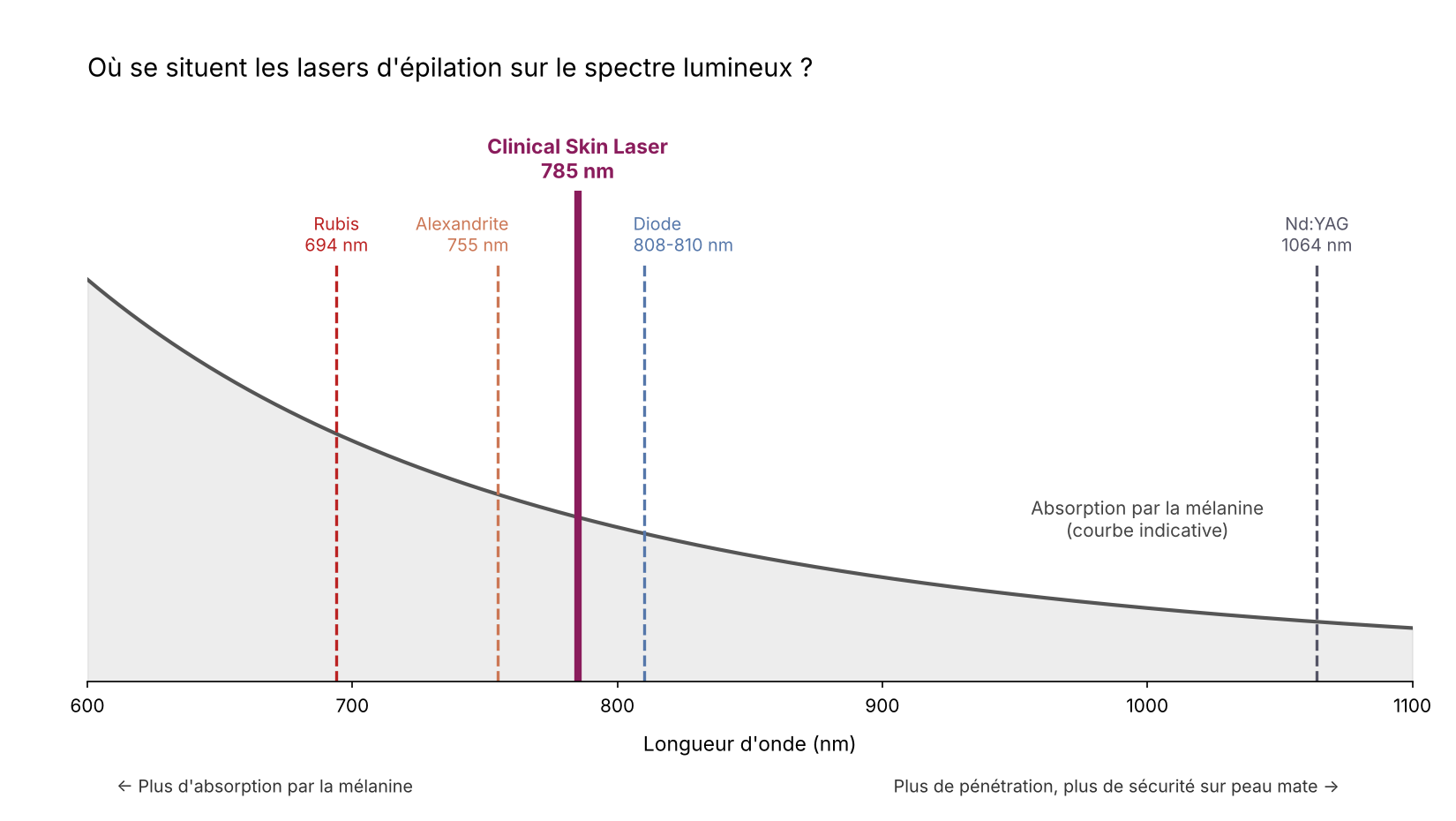
A review of the scientific literature published in the Journal of the European Academy of Dermatology and Venereology identifies Alexandrite and diode lasers as the technologies with the most extensively documented effectiveness, ahead of ruby and Nd:YAG.
As you may have noticed in the diagram above, 785 nm sits precisely between Alexandrite and conventional diode wavelengths. And that's no coincidence.
The 785 nm wavelength of the Clinical Skin Laser is the result of several years of research and development carried out by Contour Paris teams in France. Before being selected, this wavelength underwent extensive clinical studies to assess its effectiveness and tolerance under real-world treatment conditions.
Wavelength selection is a determining factor in the design of a hair removal laser. It is not simply a question of effectiveness on the hair: it involves several fundamental trade-offs.
From a clinical perspective, the objective is to find the best balance between effectiveness on the target, depth of action, selectivity for melanin and safety across different skin phototypes.
From a technological perspective, wavelength directly influences the choice of laser source, energy efficiency, cooling requirements, system architecture, as well as the long-term robustness and reliability of the equipment.
From an economic perspective, it affects the cost of the technology, manufacturing and maintenance expenses, but also the machine's clinical versatility, usage potential, return on investment and profitability.
Choosing a wavelength therefore involves a comprehensive optimization process combining clinical, technological and economic considerations.
This is precisely the approach behind the Clinical Skin Laser. The choice of 785 nm does not aim to optimize one isolated criterion. Instead, it consistently combines clinical effectiveness, operational safety, versatility across phototypes, technological robustness and economic relevance.
In practical terms, here's what this means for you:
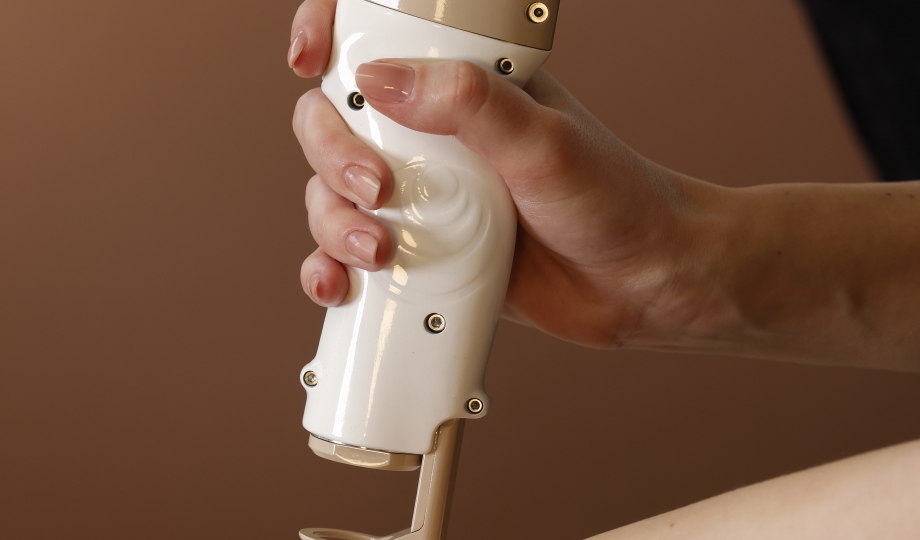
A wavelength also means a laser source, with its own manufacturing and maintenance requirements. The Clinical Skin Laser uses diode technology, known for its energy efficiency and robustness. Combined with a continuous cold-air cooling system, it provides a high level of comfort for clients, even on sensitive areas such as the bikini line or underarms.
For your clinic, this translates into a high-performance, versatile and reliable technology designed for everyday use, with a controlled approach to safety, maintenance and profitability.
Every client you have to turn away because your equipment is not suitable for their skin represents lost revenue, and potentially a client who goes to a competitor. A laser that can accommodate the phototypes commonly encountered in your practice allows you to say yes more often, while maintaining safety.
The profitability of a laser depends less on its purchase price than on its utilization rate and operating costs. A robust technology that requires little maintenance and can be used on a broad client base is used more frequently and pays for itself faster.
In laser hair removal, an incident can cost far more than a complimentary treatment session. A carefully designed balance between effectiveness and safety, combined with thorough skin phototype assessment and a properly trained practitioner, is your best protection.
It is also worth remembering that, under the French Decree of May 24, 2024 and the Order of February 19, 2025, beauty professionals in France must complete mandatory foundational training before performing laser hair removal.
Before signing, don't focus solely on the figure printed on the brochure. Ask the manufacturer these questions:
A reputable manufacturer should be able to provide a well-supported answer to each of these questions. That is precisely what Contour Paris set out to achieve with the Clinical Skin Laser: a technology designed not just around a wavelength, but around the overall usability, performance, safety and profitability of the equipment.
785 nm is not just another number in the lottery of laser wavelengths. It is a deliberate engineering choice: positioning the wavelength between the strong melanin absorption of Alexandrite and the versatility of conventional diode technology, to offer beauty professionals a rare balance between effectiveness, safety and profitability.
Want to see what this means in the treatment room? The easiest way is to experience it for yourself.
Discover the Clinical Skin Laser® in Action
Want to see how 785 nm can make a difference in your aesthetic clinic? Request a demonstration with our team.
Request a DemonstrationThere is no universally "best" wavelength. Each represents a compromise between absorption by hair melanin, penetration depth and skin safety. The right choice depends on your clients' skin phototypes and how you intend to use the machine.
Alexandrite (755 nm) is strongly absorbed by melanin, making it highly effective on fair skin and dark hair, but more challenging to use on darker skin tones. Diode lasers (around 808-810 nm) penetrate more deeply and offer greater versatility across skin phototypes.
To combine strong affinity for hair melanin, close to that of Alexandrite, with a greater safety margin for the skin. This choice is the result of several years of research and clinical studies conducted by Contour Paris.
The 785 nm wavelength is designed to cover the phototypes most commonly encountered among French clients, from fair to medium and darker skin tones. As with any laser, a thorough skin phototype assessment is essential before starting any treatment protocol.
Yes. It influences the laser source, energy efficiency, cooling and maintenance requirements, as well as the number of clients you can treat. All these factors directly affect return on investment.
Yes. Since the Decree of May 24, 2024, beauty professionals in France can perform laser hair removal, provided they have completed the foundational training established by the Order of February 19, 2025.
Share




























































Vos informations ont bien été mises à jour.
Cette fenêtre se fermera automatiquement dans quelques secondes...
Cette fenêtre va se fermer automatiquement dans 3 secondes...
Veuillez saisir l'adresse email rattaché à votre compte client pour recevoir un lien de réinitialisation de votre mot de passe.
Vous pouvez maintenant commander et suivre vos commandes. Cette fenêtre va se fermer automatiquement dans 5 secondes...