Share



Training is an investment. But in the beauty industry, you rarely have to carry the cost alone: CPF, OPCO, FAFCEA, France Travail… funding schemes are available. The challenge is knowing which door to knock on, and when.
Let's admit it: funding can discourage professionals before they have even chosen their training course. Acronyms pile up, rules change every year and official websites do not always speak the language of the salon floor. As a result, many beauty professionals pay for training themselves when it could have been funded, or simply give up altogether.
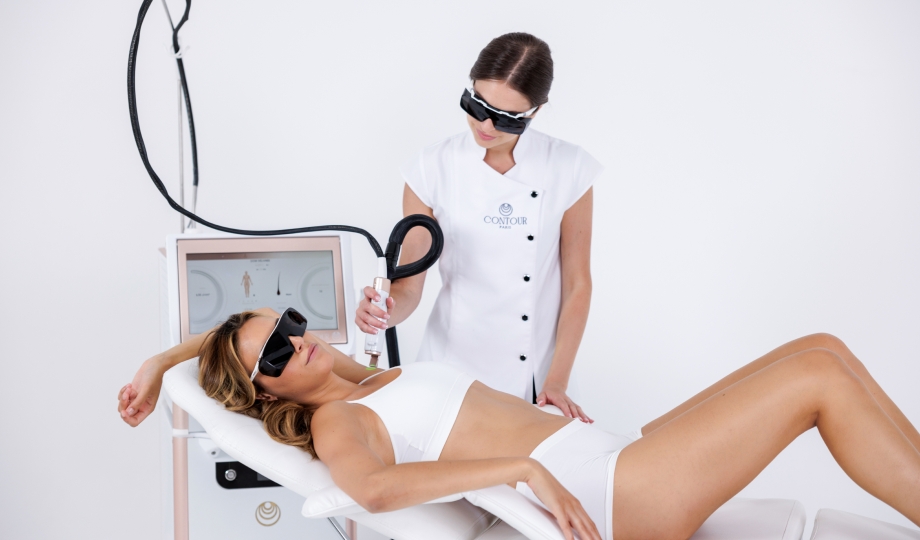
This is particularly unfortunate because 2026 is a pivotal year. With foundation training now mandatory for laser and IPL hair removal, thousands of professionals must complete their training by 1 September 2027. This guide explains everything: who funds what depending on your status, what the conditions are and in which order you should complete the steps.
The role of the beauty therapist has rarely changed as quickly as it is changing today. Technologies are entering treatment rooms, clients arrive better informed and regulations are becoming stricter. Training allows you both to keep up and to secure your business.
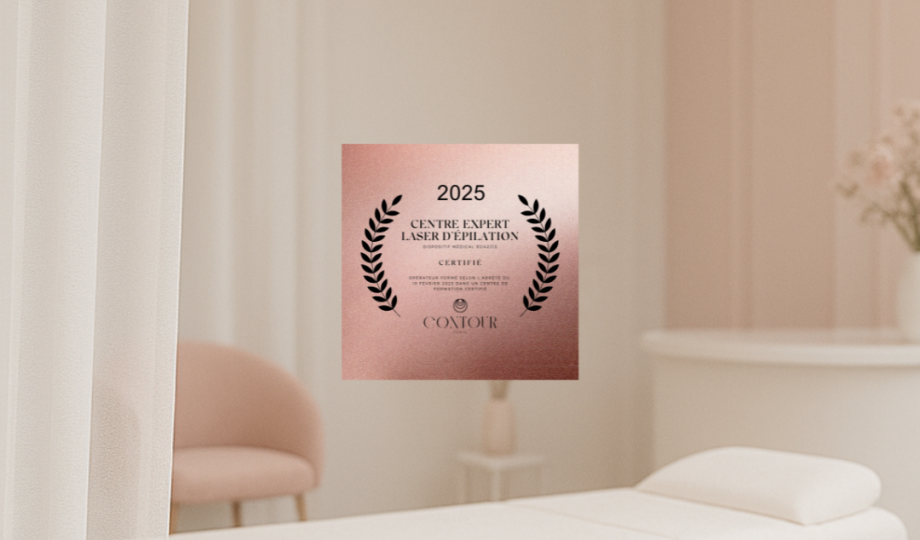
Clients trust professionals who can explain what they are doing and why. Every training course gives you the right vocabulary, the right reflexes and genuine technical expertise. That confidence can be felt from the very first appointment. Certificates displayed in the treatment room reassure clients, while your consultation becomes more authoritative. It is also the foundation of recognition programmes such as the Contour Paris Excellence Label.
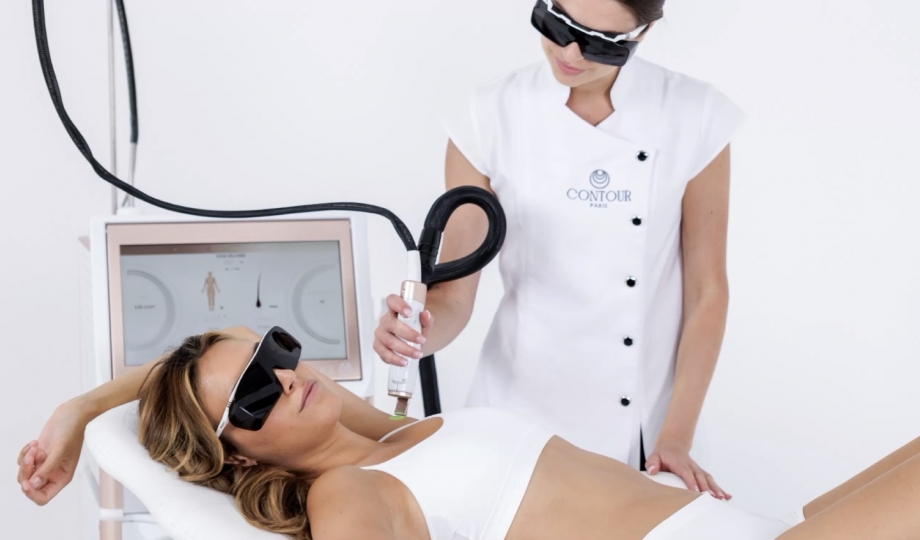
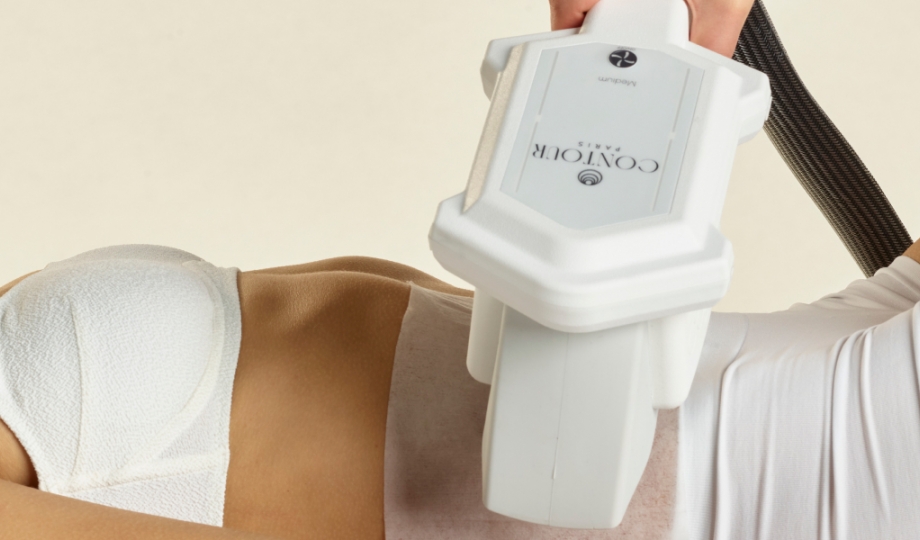
Laser, radiofrequency and cryolipolysis technologies require precise knowledge of contraindications, settings and techniques. Training protects your clients, but it also protects you. In the event of an incident, being able to demonstrate that you have been properly trained can make all the difference. Choosing compliant equipment matters just as much: see our article about medical CE marking.
Manual techniques, signature treatments, slimming support, consultative selling and marketing: continuing education is one of the most direct ways to enrich your offer and increase average client spend. It differentiates your salon from competitors while strengthening your credibility and expertise. For inspiration, discover our 6 original ideas for diversifying your treatment menu.
Every new skill creates another way for clients to discover your salon. Permanent hair removal attracts men seeking treatment for the back or beard area. Technology-based treatments appeal to a demanding and highly informed Generation Z. Skin-firming treatments meet the expectations of clients following significant weight loss.
A high-value service sold as a treatment programme contributes far more to turnover than a one-off treatment. The challenge is knowing how to present it without applying pressure. This is the purpose of programmes such as Consultative Selling in Beauty Salons and the Expert Slimming Training.
An evolving treatment menu gives clients new reasons to return. And a team that continues learning is more likely to remain motivated. Skills development is one of the strongest employee-retention tools and a genuine recruitment advantage.
This has been the major regulatory change of recent years. Since Decree No. 2024-470 of 24 May 2024, qualified beauty professionals can perform laser and intense pulsed light hair removal provided they have completed the mandatory foundation training.
The Order of 19 February 2025 sets the duration at four days for laser, two and a half days for IPL and five days for both. The certificate remains valid for five years before refresher training is required.
For professionals already practising, the Order of 11 August 2026 extended the deadline until 1 September 2027. That provides extra time, but sessions can fill quickly, so it is worth arranging funding now.
For anyone entering the profession, the CAP Esthétique Cosmétique Parfumerie remains the main entry route. It is a French state diploma listed in the RNCP, which gives access to the broadest range of funding options.
The right funding depends first on who you are: employee, business owner, jobseeker or career changer.
The best reflex is to ask the training provider for the RNCP or RS registration number and check it on Mon Compte Formation.
The Compte personnel de formation follows you throughout your career. An employee working at least half-time accumulates €500 per year up to a maximum of €5,000. Someone without a qualification equivalent to CAP level may accumulate €800 per year, up to €8,000. Self-employed workers and craft business owners may also accumulate €500 per year up to €5,000.
Two points require attention:
If you work as an employee in a beauty salon, your training may be financed by your employer's skills operator. For the French beauty and cosmetics sector, this is OPCO EP.
In practice, your employer submits the request before training begins using the training provider's quote and programme. Funding amounts and limits are updated annually by the industry branch.
If you are self-employed, an independent beauty therapist or a micro-entrepreneur registered as a craft business, your training may fall under FAFCEA.
The main conditions include:
Since 1 September 2026, businesses paying a professional training contribution of €85 or less have annual funding capped at €600. Check the current criteria directly with FAFCEA.
If you are registered with France Travail, whether or not you receive benefits, the Aide individuelle à la formation (AIF) may fund some or all of your course provided it is consistent with your career plan and approved by your adviser.
If the course is CPF eligible, your CPF rights normally need to be used first, with AIF potentially covering the remaining amount.
If you are employed in a completely different sector and want to become a beauty therapist, the Projet de transition professionnelle (PTP) can fund a long certifying course while maintaining your salary, subject to eligibility conditions.
Since 1 January 2026, the new reconversion period has replaced Pro-A and Transitions collectives. It allows private-sector employees to develop or change career through recognised qualifications, with funding provided through the relevant OPCO and potentially supplemented by CPF.
French regions are major funders of training for jobseekers. Each operates regional programmes and may also provide support for transport, accommodation or particular target groups.
For CAP or BP beauty qualifications, apprenticeships remain an attractive route. Training is funded, the apprentice receives a salary and the employer may qualify for financial support.
People with disabilities may receive additional support from Agefiph to compensate for disability-related needs during training.
The former training tax credit for business owners has been abolished. Only courses completed up to 31 December 2024 qualified. FAFCEA and CPF are now among the main funding routes for business owners.
| Your situation | Main scheme | Training concerned | Key point |
|---|---|---|---|
| Beauty salon employee | OPCO EP or CPF | Qualiopi courses; CPF only for qualifying certification | Employer applies before training begins |
| Employee developing within the same company | Reconversion period + CPF | RNCP, CQP or skills blocks | Written employer-employee agreement |
| Salon owner training employees | OPCO EP | Employee training including laser foundation training | Annual industry limits apply |
| Self-employed beauty professional | FAFCEA or CPF | Business-related courses; CPF for certifying programmes | Apply before training starts |
| Jobseeker | Region, France Travail, CPF | Approved training | No €150 CPF contribution |
| Employee changing career | Transitions Pro or CPF | RNCP qualifications such as CAP or BP | Salary may be maintained |
| Apprentice | Apprenticeship | Work-study qualifications | Apprentice receives a salary |
| Person with a disability | Agefiph | All training | Additional disability-related support |
Since 1 January 2022, training providers must hold Qualiopi certification for their programmes to be funded through public or pooled funds such as CPF, OPCO, France Travail and Transitions Pro.
For a qualification course, check the RNCP or RS number. For mandatory laser and IPL foundation training, ensure the programme complies with the relevant French regulations.
A good programme specifies learning objectives, daily content, prerequisites, theory versus practical training and assessment methods.
Ask who will train you, what their qualifications are and how much practical professional experience they have.
You cannot learn a technical procedure from slides alone. Check how much hands-on practice is included and whether you will work on real models.
Ask which equipment will be used during training and whether it is recent, professional and medically CE marked.
Useful resources include theory manuals, protocol sheets, videos and e-learning modules that remain accessible after the course.
A good provider remains available after the course and offers follow-up support when questions arise during your first weeks of practice.
Ask for satisfaction and pass rates, read former trainees' reviews and request a quote clearly showing what is and is not included.
Training helps you build expertise, improve safety and attract clients. Funding does not have to be complicated if you understand the rules. Employees can look to OPCO EP, self-employed craft business owners to FAFCEA, jobseekers to France Travail, and career changers to Transitions Pro and CPF.
With mandatory laser foundation training due by 1 September 2027 for the professionals concerned, now is the time to take action.
Yes, if the course is certifying and listed in the RNCP or Répertoire spécifique. A €150 contribution may apply unless you qualify for an exemption.
An employee working at least half-time generally accumulates €500 per year up to €5,000. People without a CAP-level qualification may accumulate €800 per year up to €8,000.
Generally not. It is regulatory training rather than a certification. Employees generally use OPCO EP, while eligible self-employed craft business owners may use FAFCEA.
The French beauty and cosmetics branch is covered by OPCO EP.
Yes, subject to registration as a craft business and being up to date with professional training contributions.
Always before the course begins. Exact deadlines vary depending on the scheme.
Qualiopi is the French quality certification required for training providers whose programmes use public or pooled funding.
Potentially yes, through the Projet de transition professionnelle managed by Transitions Pro, subject to eligibility conditions.
Check Qualiopi certification, recognition or regulatory compliance, the quality of the programme, trainer experience, practical content, equipment, learning materials and post-training support.
Share





































































Vos informations ont bien été mises à jour.
Cette fenêtre se fermera automatiquement dans quelques secondes...
Cette fenêtre va se fermer automatiquement dans 3 secondes...
Veuillez saisir l'adresse email rattaché à votre compte client pour recevoir un lien de réinitialisation de votre mot de passe.
Vous pouvez maintenant commander et suivre vos commandes. Cette fenêtre va se fermer automatiquement dans 5 secondes...