
Share


“Laser or IPL?” It is probably the question beauty professionals ask most often when they are considering investing in hair removal technology. And it is often the key to all the other questions: profitability, safety and client satisfaction.
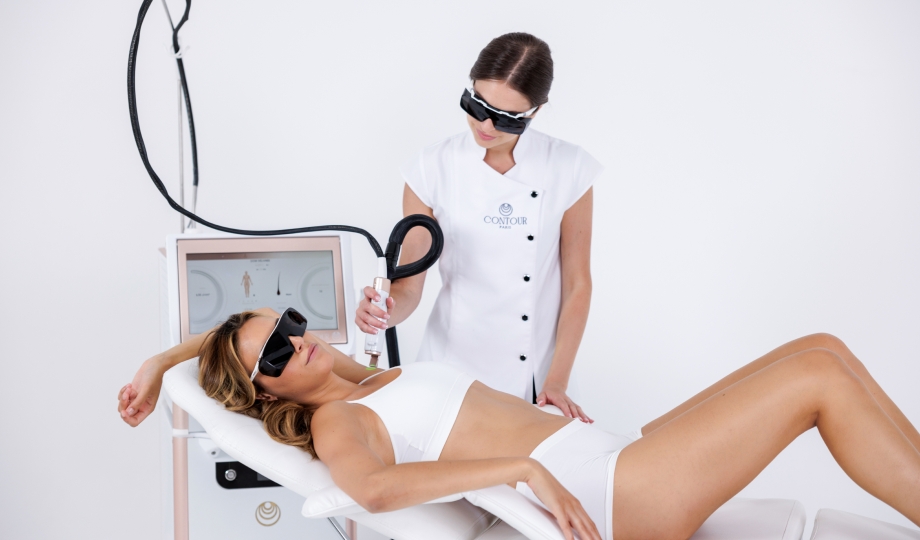
On paper, the two technologies can look very similar. A handpiece, a flash and eventually a hair that falls out. Under the skin, however, they tell very different stories. One sends precise light at a single wavelength. The other emits a broad spectrum, rather like a projector whose light is filtered as effectively as possible.
Since French regulations opened these procedures to qualified beauty professionals, the question is no longer theoretical. It becomes very real when you are about to sign a purchase order or select your training. This guide starts from the beginning: the legal framework, the physics, what the differences mean for your clients and what they mean for your appointment book.
For decades, laser and intense pulsed light hair removal in France were legally reserved for doctors. Decree No. 2024-470 of 24 May 2024 changed that. Three groups may now perform these procedures for non-therapeutic purposes: doctors, state-registered nurses and qualified beauty professionals.
The framework was confirmed by the French Conseil d'État on 12 March 2026 when it rejected an application to annul the decree (Decision No. 496304).
In other words, laser technology has entered beauty salons through the front door, but you need the right key.
Laser and intense pulsed light rely on the same broad principle: heating the hair down to its root in order to disrupt regrowth. But they do not achieve this with the same level of precision.
The principle comes from an article published in Science in 1983 by Harvard dermatologists Rox Anderson and John Parrish (PubMed). Their concept was simple: if light of the right colour is delivered for the right amount of time, it can preferentially heat the structure that absorbs it while largely sparing neighbouring tissue.
In hair removal, the target is melanin, the pigment that gives hair its colour. The light is absorbed by the hair and converted into heat, which travels down towards the follicle.
The difficulty is that skin also contains melanin. The more precisely the light can target the hair, the more effectively heat can be concentrated on the target while limiting unnecessary heating of the surrounding epidermis.
A laser emits monochromatic light: one wavelength, for example 755, 785, 810 or 1,064 nanometres. Laser light is also coherent and collimated, meaning the beam remains concentrated rather than spreading widely.
Think of a tuning fork producing one perfect note. The practitioner chooses the wavelength that will be absorbed appropriately by the hair while taking the skin into account, then adjusts the energy and pulse duration according to the client's phototype.
Intense pulsed light, or IPL, uses a flash lamp. It emits polychromatic light containing a wide range of wavelengths at the same time, which are then filtered. The light is incoherent and diverges as it leaves the handpiece.
Using the musical analogy, it is more like an entire orchestra playing at once. Filters remove some of the instruments, but the range remains broad.
The reference Cochrane review observed around 50% hair reduction at up to six months with alexandrite and diode lasers. Evidence for IPL was more limited, although the review also highlighted limitations in the available trials.
A more recent meta-analysis focusing on skin phototypes III to VI found broadly comparable results but reported a trend towards better hair reduction with laser than IPL (PubMed).
In simple terms: both technologies can reduce hair. Laser does so with greater optical precision.
Home IPL devices have become widely available. Their message is straightforward: why pay for a professional treatment when you can do it yourself at home?
If your client does not understand the difference between a professional laser and a consumer IPL device, she may compare your treatment package with the price of a home appliance rather than the value of professional expertise.
A client who understands how light-based hair removal works also understands why several sessions are required, why sun exposure matters and why very light hair responds less effectively.
The regulatory framework already requires you to provide information before treatment. You can use that moment to explain the technology simply:
| Criterion | Laser | IPL |
|---|---|---|
| Type of light | Monochromatic: one wavelength | Polychromatic: broad filtered spectrum |
| Beam | Coherent and concentrated | Incoherent and divergent |
| Precision for hair melanin | High | Moderate |
| Evidence | Around 50% reduction at six months for alexandrite and diode in reference studies | More limited evidence |
| Medium to dark skin | Possible with appropriate wavelengths | Can require greater caution |
| Consistency | Good, reproducible settings | More dependent on filters and settings |
| Comfort | Variable, often improved by cooling | Generally well tolerated |
| Mandatory foundation training | 4 days | 2.5 days |
| Initial investment | Higher | Lower |
| Versatility | Primarily hair removal depending on the device | May also address other skin indications |
| Laser | Wavelength | Main strengths | Points to consider |
|---|---|---|---|
| Ruby | 694 nm | Historical pioneer | Highly absorbed by skin melanin; now rarely used |
| Alexandrite | 755 nm | Highly effective on light skin and dark hair | Less suitable for darker skin |
| Diode | 785–810 nm | Strong balance between effectiveness and safety across a wide range of phototypes | Less effective on very fine hair |
| Nd:YAG | 1,064 nm | Deep penetration; reference option for darker skin | Less effective on fine or light hair and can be less comfortable |
At 755 nm, alexandrite is strongly absorbed by melanin. This can make it highly effective for dark hair on lighter skin, while requiring greater caution on more pigmented skin.
Between 785 and 810 nm, diode lasers penetrate more deeply and interact less with surface melanin than shorter wavelengths. They remain effective on most dark hair while covering a broad range of skin tones.
At 1,064 nm, Nd:YAG is less strongly absorbed by epidermal melanin. This makes it a reference wavelength for darker phototypes when used appropriately.
Some devices combine several wavelengths in order to cover more profiles. However, this never removes the need for an accurate assessment of the client's skin and hair. Before purchasing, check the actual wavelengths, delivered energy, cooling system, medical CE marking and after-sales service.
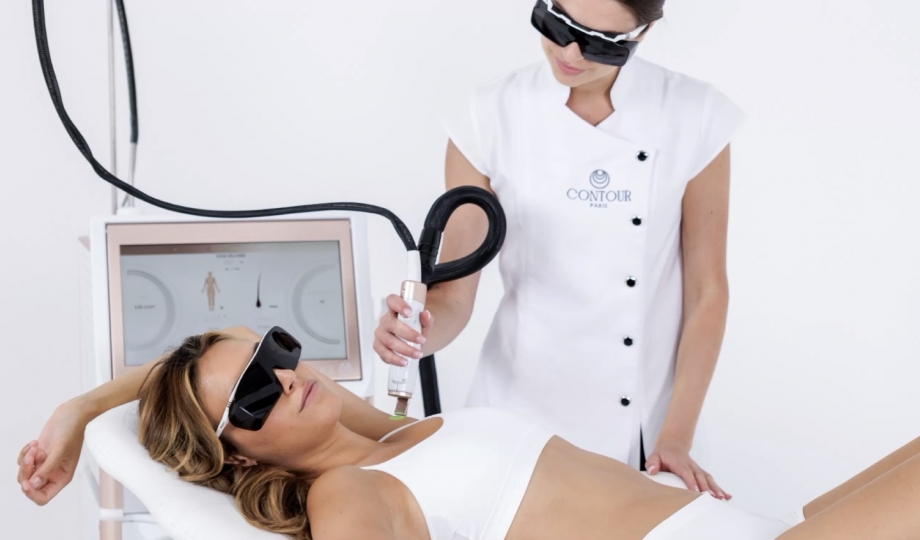
Offering laser means providing a professional treatment governed by regulation, mandatory training and professional equipment.
Clients who see clear reductions in hair growth over the course of treatment are likely to talk about their experience and recommend your salon.
Laser hair removal is delivered as a multi-session protocol over several months, followed where appropriate by maintenance.
Multi-session and multi-area packages can provide more predictable revenue than isolated treatments.
Professional laser technology occupies a clearly different position from consumer IPL devices.
With an appropriate wavelength and protocol, more phototypes can be accommodated. Laser also opens the door to male clients seeking back, chest or beard-line treatments.
Mandatory training, signed information sheets and displayed contraindications provide a structured framework for both the salon and the client.
Laser hair removal is particularly suited to periods when treated areas receive less sun exposure, helping salons balance activity throughout the year.
A client who trusts you with permanent hair removal may also become more receptive to your slimming, anti-ageing or facial-care expertise.
Mastering advanced technology can be rewarding for beauty professionals and may also help attract employees looking to develop specialist skills.
So, laser or intense pulsed light? Both technologies can reduce hair, and both are now available to appropriately trained beauty professionals in France. But if your objective is to offer precise, consistent permanent hair reduction across a broad range of client profiles, laser retains an advantage thanks to its monochromatic and highly controlled light.
The best choice is ultimately the one that matches your clientele, budget and business plan. Take time to train properly, compare wavelengths and ask manufacturers what support they provide.
Laser emits a single coherent and concentrated wavelength selected to target melanin in the hair. IPL emits a broader filtered spectrum of wavelengths and is therefore less targeted.
Available research provides stronger evidence for alexandrite and diode lasers, including approximately 50% hair reduction at six months in the reference Cochrane review. Evidence for IPL is more limited.
Yes. Since Decree No. 2024-470 of 24 May 2024, qualified beauty professionals in France may perform non-therapeutic laser and IPL hair removal provided they meet the regulatory training requirements.
The Order of 19 February 2025 sets foundation training at four days for laser, two and a half days for IPL and five days for both. The certificate is valid for five years.
The Order of 11 August 2026 extended the deadline until 1 September 2027.
Yes, when an appropriate wavelength is used. Nd:YAG at 1,064 nm is a reference option for dark skin, while diode lasers can cover a broad range of phototypes.
Very little or not at all. These hairs contain insufficient melanin to absorb the light effectively. This limitation applies to both laser and IPL.
They operate at much lower power levels for safety reasons and do not replace a professionally delivered treatment protocol.
Share














































Vos informations ont bien été mises à jour.
Cette fenêtre se fermera automatiquement dans quelques secondes...
Cette fenêtre va se fermer automatiquement dans 3 secondes...
Veuillez saisir l'adresse email rattaché à votre compte client pour recevoir un lien de réinitialisation de votre mot de passe.
Vous pouvez maintenant commander et suivre vos commandes. Cette fenêtre va se fermer automatiquement dans 5 secondes...